
Sovereign bonds are currently taking a beating. Yields on 30-year US Treasuries are now hovering near two-decade highs – despite the “mini-intervention” from the US administration. The current rout in government bonds, which we have kept below our benchmark weighting for quite some time, hardly comes as a surprise: beyond tensions in the Gulf and robust global growth, a series of structural risks continues to weigh heavily on the asset class.
But at what point will higher yields pose a threat to equities, which continue to trade relatively close to their all-time highs? In our view, a significant equity drawdown is unlikely until higher rates or heightened rate volatility begin throttling capital expenditure across both the financial and real economy. As we outline in this report, there is little sign of that today: the macroeconomic momentum remains solid, and demand for credit is holding up well. This should cap any equity sell-off. Within the current higher rates market backdrop, we see market pullbacks primarily as an opportunity to add to our equity allocation.
Surging yields: More than an Oil story
The relentless climb in long-dated bond yields has dominated market headlines over the summer. Yields on 30-year US Treasuries recently broke through 5.30% – their highest level since 2007. Facing the prospect of a bruising defeat in the November midterms, the US administration stepped in as long-end yields became untenable: Treasury Secretary Scott Bessent swiftly announced a ramp-up in bond buybacks within this segment. Yet this "mini-intervention" has so far fallen flat, with long-term Treasury yields hovering stubbornly near their highs.
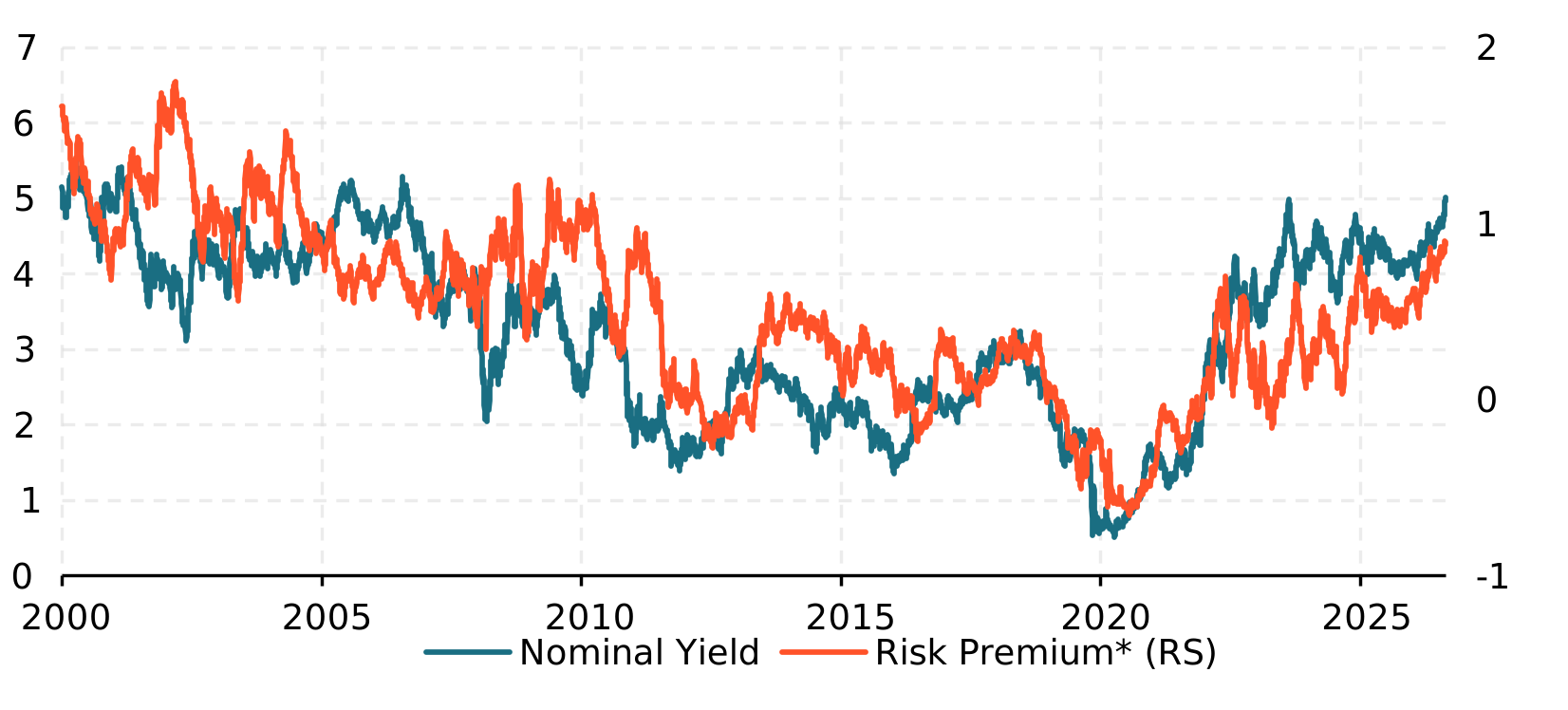
But what’s really behind the current spike in yields? At first glance, the culprit seems obvious: supply disruptions from the Middle East are pushing oil prices and market inflation expectations higher. This dynamic – coupled with the threat of rate hikes –continues to weigh heavily on government bonds. However, the sharp rise in the implied risk premium alone (Fig. 1) suggests that there is far more to this move than "just" higher inflation expectations.
Fig. 1: The Risk Premium on US Treasuries has risen significantly recently
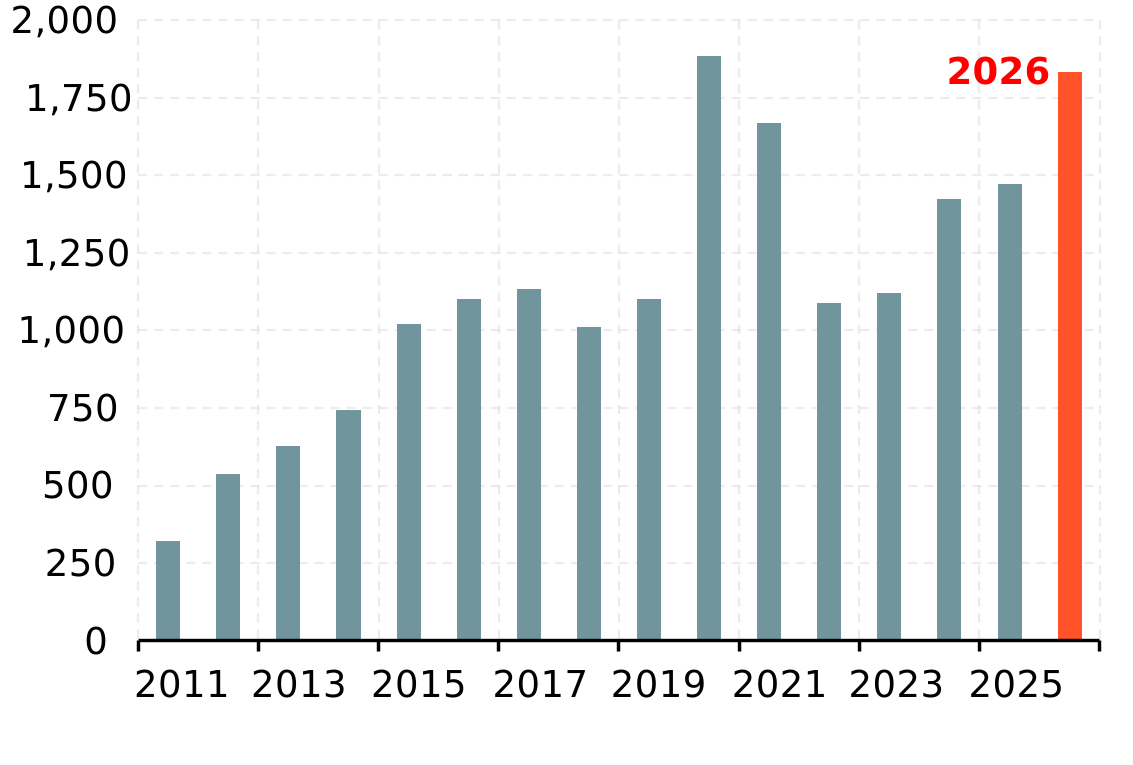
Globally surging fiscal deficits have also undoubtedly contributed to the bond market's woes. An OECD study now estimates that governments globally must allocate USD 2 trillion simply to service their annual interest burden. More importantly, governments around the world are currently showing no appetite for fiscal restraint. In the US - the world’s largest debtor - the fiscal deficit continues to widen at a record pace. The unrelenting sovereign debt accumulation¹ is driving up the term premium and (and therefore yields).
Yet it is not merely the public sector tapping debt markets: corporations are also issuing debt at breakneck speed. Only during the zero-lower-bound regime of 2020 was year-to-date primary market issuance higher. Driving these colossal volumes are, among others, the AI hyperscalers, which are increasingly turning to the debt markets to fund heavy CAPEX for data centers. Thus far, the market has absorbed this supply deluge remarkably well, with corporate credit spreads hovering near cycle lows.
For government bonds, this flood of corporate paper is problematic. Top-rated debt issued by tech titans competes directly with sovereign paper for a finite pool of institutional capital. In this tug-of-war, sovereign bonds frequently come off second best: for comparable credit ratings, corporate paper often offers a noticeably higher yield pickup. Heavy primary issuance by high-grade corporates has therefore likely contributed to the buyers’ strike in sovereign paper, adding further upward pressure on yields.
In addition, strong macro data has likely accelerated the fixed-income sell-off. With leading economic indicators running hot over recent weeks and months, the Atlanta Fed’s GDPNow tracker is pointing to real US economic growth for Q3 of close to 4.5%. This growth momentum is weighing on sovereigns, alongside structurally higher inflation volatility² and potential capital repatriation flows from Japanese investors³ – all of which look set to drive sovereign term premia higher still.
Fig. 2: The US Budget Deficit continues to rise
Cumulative new US debt by fiscal year (Bn USD)
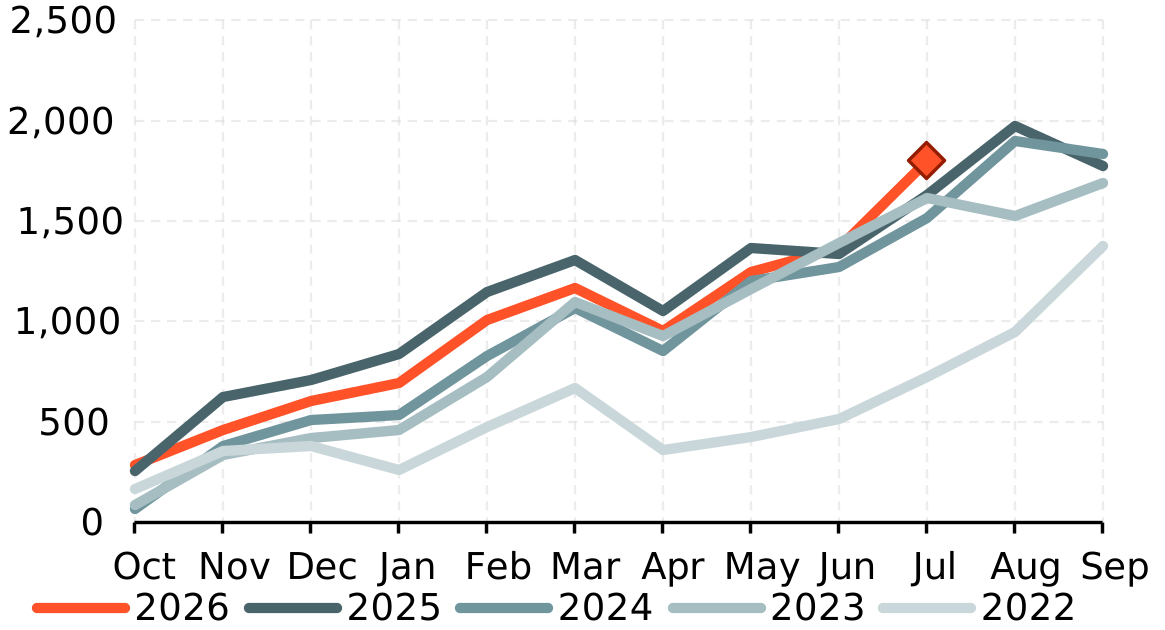
Fig. 3: Surge in New Corporate Bond Issuance
New issuance in the US corporate bond market since the beginning of the year compared to previous calendar years (Bn USD, Jan. – Aug.)
When do Interest Rates become a Problem for Stocks?
Given the elevated interest rate environment, investors are increasingly asking at what point the fixed-income rout will spill over into equity markets. The conventional textbook theory from Finance 101 is straightforward: higher discount rates reduce the present value of future corporate earnings. Higher yields should therefore compress equity valuations – at least that is what theory dictates.
In practice, however, textbook models often fail the reality test. The inverse relationship between bond yields, valuations, and equity returns holds occasionally – but by no means consistently (Fig. 4). The quintessential counterexample is the dot-com bubble of the early 2000s. During the largest speculative market frenzy of the past 50 years, 10-year US Treasury yields hovered around 6% - nearly 100 basis points higher than today. Yet US equity valuations surged to dizzying heights.
Elevated yields become a genuine problem for equities once they begin choking off investment activity in either the financial sector or the real economy. For instance, higher debt-servicing costs can make borrowing so expensive that corporate credit demand contracts. Indeed, there is a clear inverse correlation between financial conditions – i.e. how easily corporates can access credit – and US economic activity (Fig. 5). When financial conditions tighten, credit demand softens, leading to reduced capital expenditure and, ultimately, slower growth. That macroeconomic deceleration subsequently weighs on equity markets.
Crucially, higher yields do not automatically dampen credit appetite. If growth prospects are so large that firms can out-earn their cost of capital, companies will gladly absorb more expensive debt servicing costs. In that scenario, corporate borrowing and CAPEX accelerate, supporting broader economic momentum – despite higher rates.
However, a fixed-income sell-off can undermine equities even without an initial downturn in the real economy: sharply higher yields and, crucially, a surge in rate volatility can prompt stricter collateral requirements across financial markets⁴. Tighter risk limits force leveraged market participants – who pledge collateral to fund geared positions – to de-gross and curtail aggregate portfolio risk. The ensuing selling pressure inevitably hits equities, even if macro fundamentals remain largely intact.
Fig. 4: High Interest Rates don’t always lead to falling P/E ratios
10-year US Treasury yields (x-axis, in %) vs. the price-to-earnings ratio of the MSCI USA (y-axis)
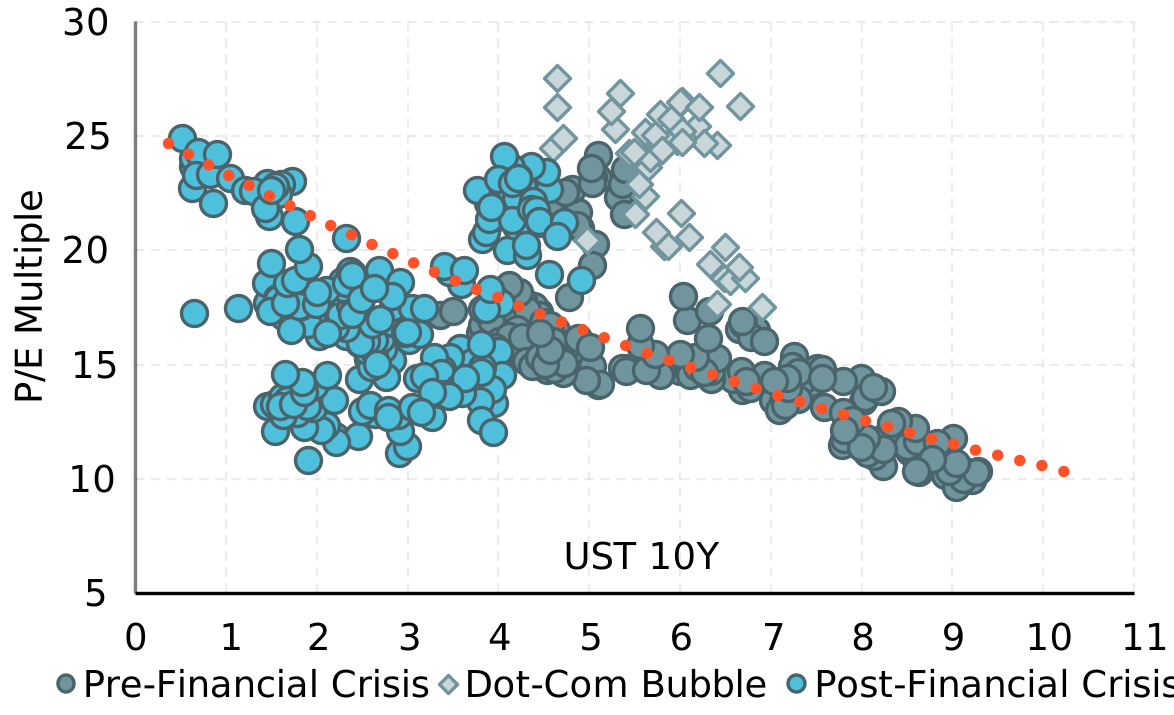
Fig. 5: Financing Conditions are essential
ISM Purchasing Manager’s Index for the manufacturing sector vs. the percentage of companies reporting worse financing conditions
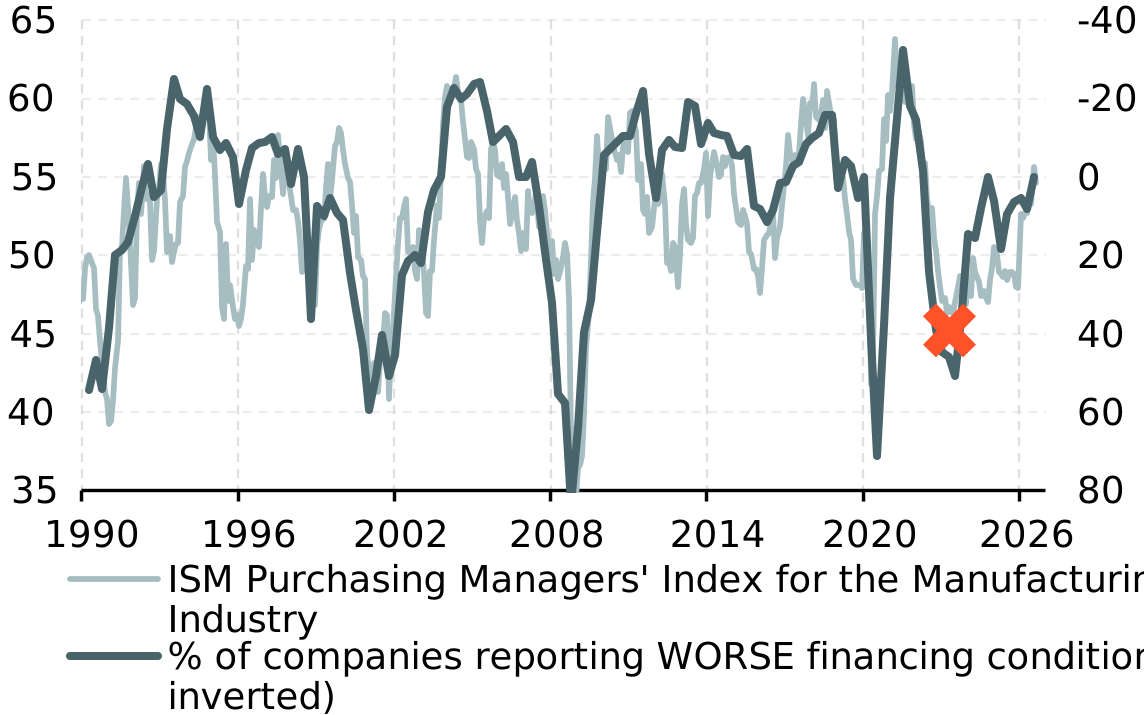
How rapidly deteriorating financial conditions across both the financial sector and the real economy can catch up with markets was vividly demonstrated in the summer and autumn of 2023: the sudden spike in long-end yields choked off credit demand across the market at the time (Fig. 5, orange cross). Back then, a substantial net balance of respondents in the Federal Reserve's Senior Loan Officer Opinion Survey (SLOOS) reported tightening credit standards, while leading indicators dropped to levels pointing toward contracting US output. At the same time, rising interest rate volatility triggered an increase in collateral haircuts, forcing leveraged investors into mechanical de-risking and forced equity selling. Unsurprisingly, equities struggled in this backdrop, with the benchmark US equity index tumbling nearly 10% through early autumn 2023.
Yet in stark contrast to the summer of 2023, US financial conditions currently offer little cause for concern. The latest SLOOS release pointed to comfortably accommodative lending conditions, a picture mirrored by the Chicago Fed’s National Financial Conditions Index (NFCI), which aggregates over 100 market and credit indicators to assess conditions across US financial markets. September’s NFIB survey likewise suggests that credit availability for small and medium-sized enterprises has barely been crimped by elevated rates. Furthermore, rate volatility – unlike in late summer 2023 – remains only marginally elevated.
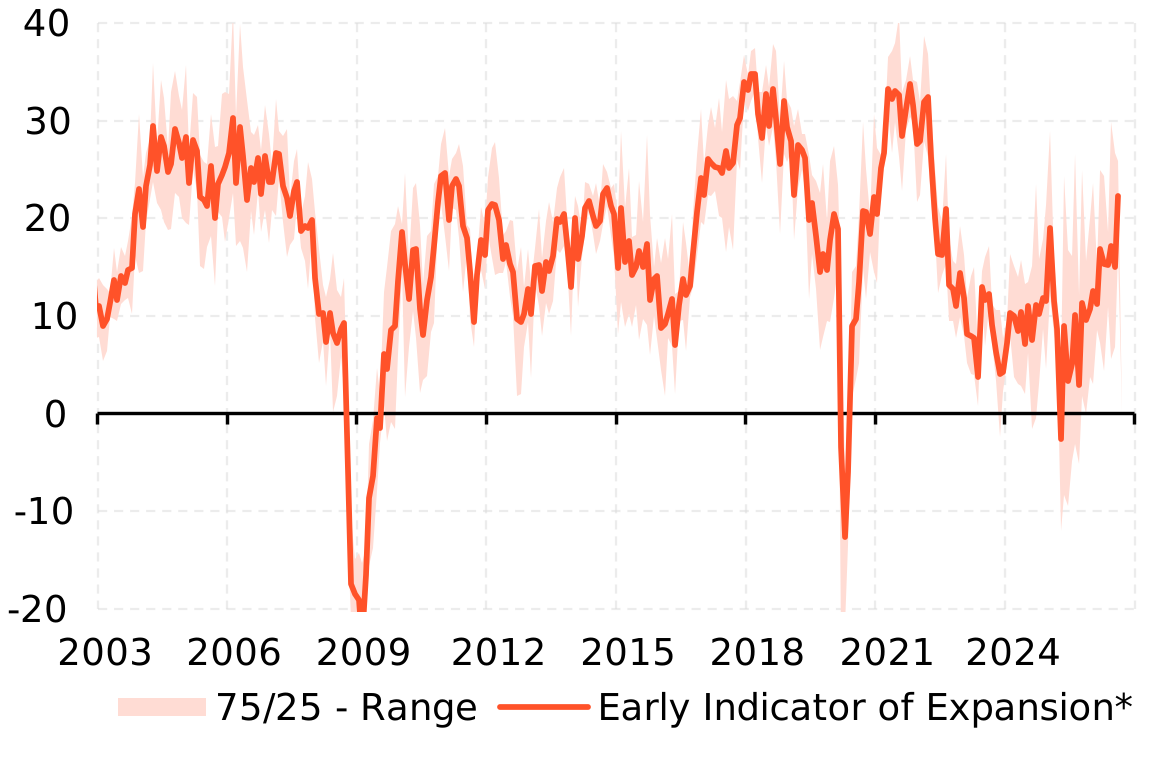
These relatively loose financial conditions are also reflected in the current economic data. Despite the high-interest-rate backdrop, regional Fed surveys continue to highlight solid expansion plans among US firms. Other forward-looking indicators, such as new order expectations, likewise remain firmly in expansionary territory. It is therefore hardly surprising that the Fed Chair, Kevin Warsh, sees no evidence of tightening credit conditions or faltering loan demand.⁵
Fig. 6: Financial Conditions remain relatively unrestrictive
Comparison of US financing condition indicators (z-score)
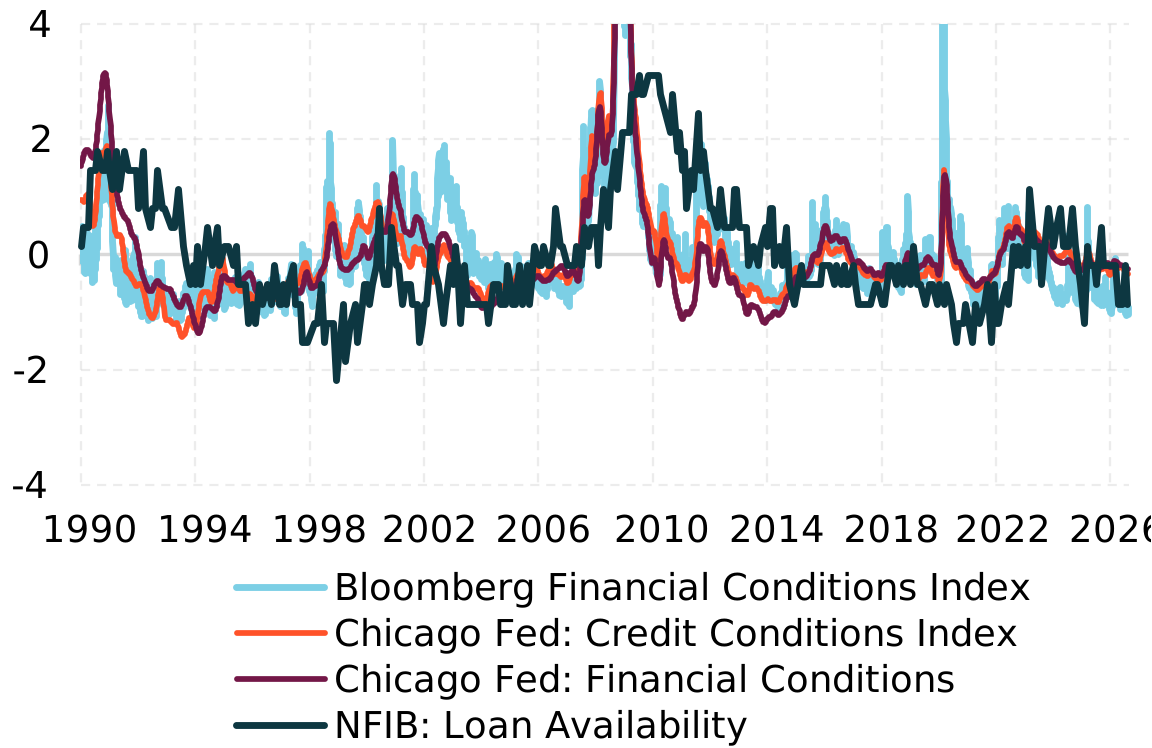
Fig. 7: Companies continue to expand
US CAPEX Intentions from the Federal Reserve’s regional surveys
How Investors should position Themselves in this Environment
A sustained bond rally will likely require a meaningful economic downturn above all else. Yet outside isolated pockets such as the US housing market, we see little evidence of that today: the US economy remains, by and large, relatively resilient. Given the numerous structural headwinds that look set to keep weighing on government bonds, we thus see little reason to raise our allocation in that segment – at least for now. How we navigate this market backdrop beyond bonds can be distilled into three key principles.
#1 As long as the US economy remains resilient, major equity pullbacks could present attractive buying opportunities. For now, credit demand remains robust, financial conditions are accommodative, and growth momentum is solid. At the corporate level, US fundamentals are equally compelling, with domestic equities coming off one of their strongest earnings seasons in the past two decades. This supportive data backdrop should put a floor under near-term equity downside. As such, we view market pullbacks as an opportunity to opportunistically increase our equity allocation – which we trimmed slightly in August – provided that financial conditions do not tighten abruptly.
The same framework applies to a potential Fed rate hike on Wednesday. Historically, equities have performed well during Federal Reserve tightening cycles as long as restrictive policy rates did not choke off broader economic growth (e.g., 1997). Only once an outright economic deceleration becomes apparent should investors contemplate a broad-based equity underweight. On a factor basis, elevated rates should keep value-oriented segments such as banks attractive. Conversely, highly leveraged businesses whose valuations hinge heavily on market expectations are likely to struggle, mirroring patterns seen in 2022, late summer 2023, and earlier Fed-rate-hiking cycles.
#2 Commodities should remain an indispensable portfolio component – regardless of whether yields choke off growth. Should higher interest rates ultimately derail the current macro momentum, both equities and traditional fixed income would face significant headwinds. In such "stagflationary" regimes – marked by elevated inflation alongside decelerating growth – commodities have historically generated notable outperformance. Consequently, commodity and energy equities, which already constitute our largest sector overweight, remain compelling even if macroeconomic momentum softens. After all, persistent inflation risks look set to stay with investors for some time.
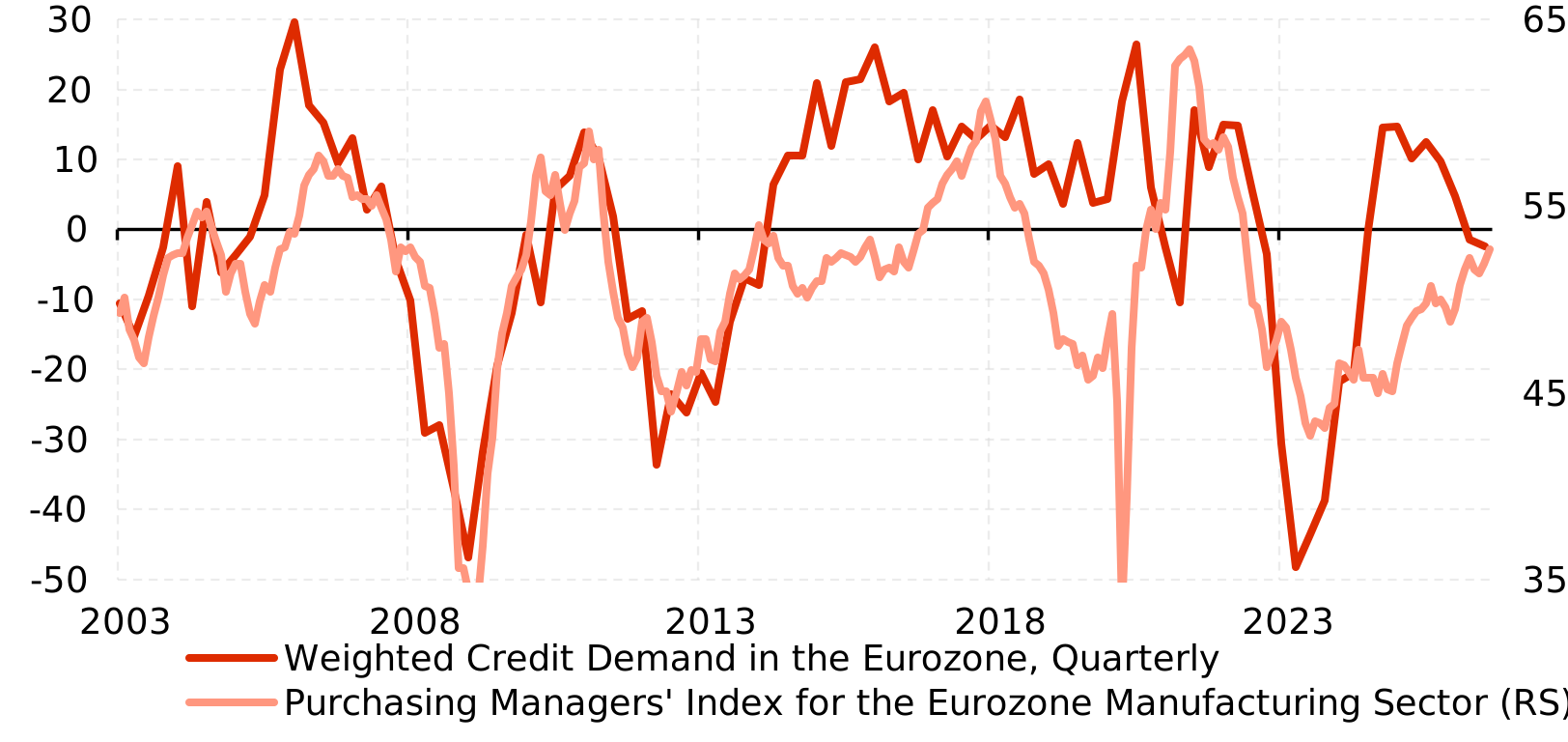
#3 Investors should underweight equity regions where financial conditions are already tightening. Data out of the Eurozone suggests that loan demand across Europe is already faltering. For Eurozone economic momentum and European equities – both of which have recently delivered positive surprises – this is a concerning signal. Both ECB policy tightening and elevated bond yields appear to be having an initial dampening effect on economic momentum. Compounded by severe macro headwinds stemming from the ongoing energy crisis, this is likely to cap upside potential for European equities outside of the energy sector.
Fig. 8: Demand for Credit in the Eurozone is already slowing down!
Comparison of quarterly credit demand and the Eurozone Purchasing Manager’s Index since 2003
Autoren

Ulrich Urbahn
Ulrich Urbahn is a CFA charterholder and, for many years, was part of one of the world’s top three multi-asset research teams in the renowned Extel survey. After earning degrees in economics and mathematics from Heidelberg University, he spent more than ten years at Commerzbank, where he worked, among other roles, as a Senior Cross-Asset Strategist. He has been with Berenberg since October 2017 and heads the Portfolio Management Liquid Alternatives & Solutions as well as the Multi Asset Strategy & Research departments. In addition, he is a voting member of the Investment Committee and is responsible for capital markets communication.