
Japan's government is currently working on a fundamental reform within the country’s investment industry. Japanese investors, whose funds have been flowing abroad on a large scale over the past decades, are now to be encouraged to allocate more of their money at home. While Japanese equity and bond markets, as well as the yen, are likely to benefit from a higher domestic investor demand, this shift poses challenges a significant for the bond markets of the rest of the world.
This is because, after years of extensive capital exports, Japan has become one of the most important international creditors to industrialized nations. Although the speed and scale of the Takaichi government's repatriation plans are only likely to take concrete shape over the coming months, a withdrawal of Japanese funds has – at least on paper – the potential to increase the risk premiums of global government bonds.
A fundamental shift within Japans investment industry
Amid renewed turmoil in the Gulf, a sharp factor rotation within equity markets and resurfacing hawkish central bank worries, a potentially fundamental development has so far flown largely under the radar. In Japan, the administration under Prime Minister Sanae Takaichi is pushing for a structural regime shift within the domestic financial industry: the country’s institutional investors are to be incentivized to allocate more capital at home, reversing decades of relentless flows in (bond) markets overseas.
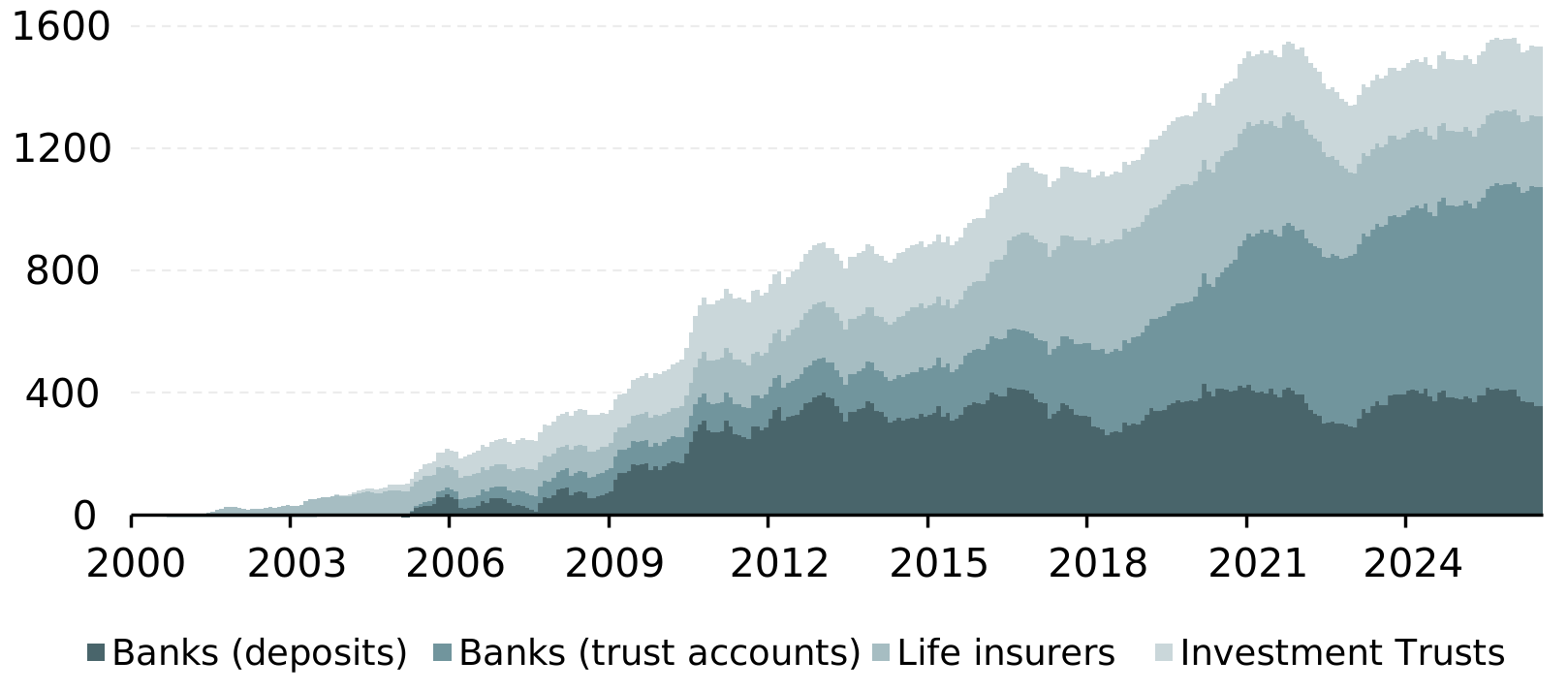
The enormous exodus of Japanese capital into global fixed income markets accelerated significantly during the so-called "Abenomics era". Under Shinzo Abe, Japan deployed ultra-loose monetary policy, including large scale quantitative easing programmes, to break the country’s deflationary spiral. The resulting compression of domestic yields drove Japanese investors out of the domestic market. They eventually found more attractive yield levels, steeper curves, and deeper credit markets abroad. Consequently, over the past decades, a staggering cumulative total of nearly USD 1.6 trillion has flowed from Japanese banks, livers and investment trusts into global bond markets (see Fig. 1).
The Takaichi government aims to stop this capital flight. To strengthen domestic markets and support the Yen, the administration plans to not only curb outflows from Japan, but also to facilitate the repatriation—or at least partial return—of foreign-accumulated assets back into Japanese financial markets.
Fig. 1: For years, Japan's financial sector has increasingly invested abroad
Cumulative net japanese purchases of international bonds (in USD Billions)
Japan’s pension giant could have a pivotal role in Japan's investment turnaround
The Japanese government is highly likely to initiate its repatriation agenda by targeting the asset allocation of the state-owned pension giant, the GPIF (see quotation on the right). The rationale is straightforward: unlike Japan’s private financial institutions, the GPIF operates as a national public pension fund under the direct purview of the Japanese Ministry of Labour. Consequently, the government can exert significant influence over the fund's strategic asset allocation – for instance, through the appointment of key members to its investment committee. Furthermore, Japan’s (smaller) pension funds align their own strategic benchmarks with the industry leader. It is therefore hardly surprising that the pension giant occupies a central role in the repatriation efforts.
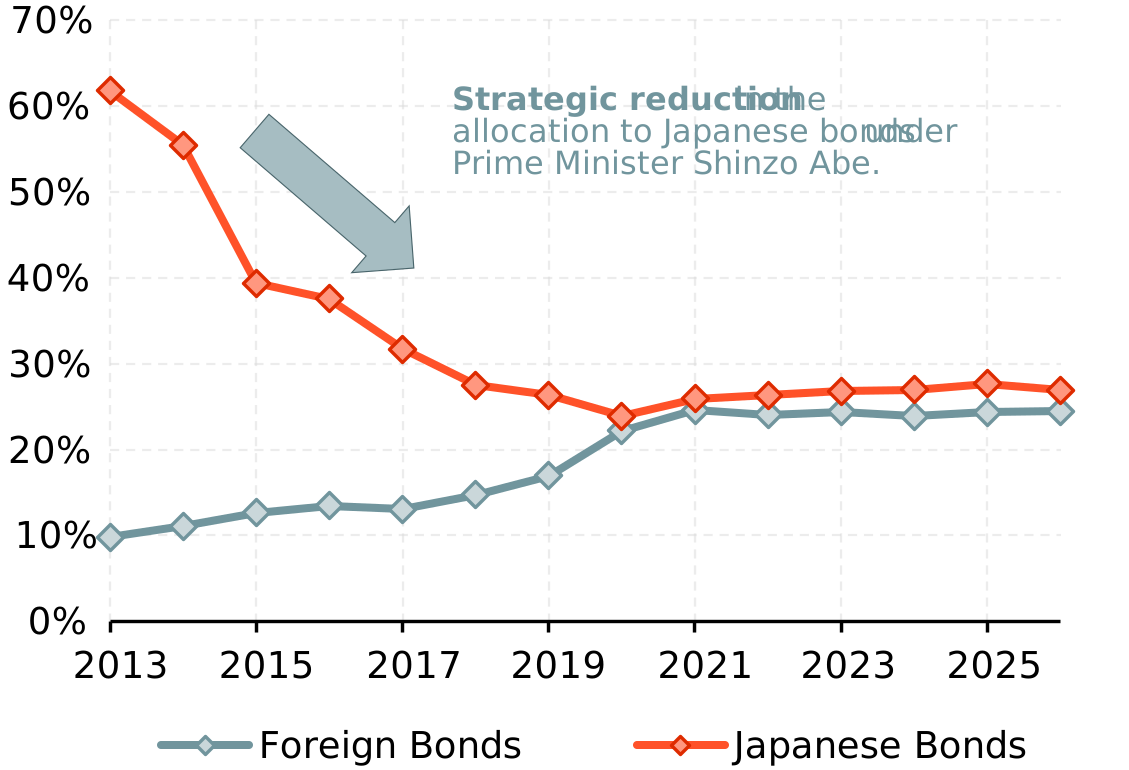
Currently managing approximately $1.8 trillion in assets, the GPIF stands as one of the largest pension funds in the world. The giant maintains a highly symmetrical portfolio, split roughly equally among international equities, international bonds, domestic equities, and domestic bonds (see Fig. 2). Yet, this was not always the case. Well into the 2010s, the GPIF maintained a heavy home bias, anchoring the vast majority of its assets in domestic sovereign debt – specifically Japanese Government Bonds (see Fig. 3).
This conservative strategy came to an abrupt end under the administration of Shinzo Abe. As a core pillar of his aggressive economic stimulus program, widely known as "Abenomics," the GPIF’s allocation to domestic bonds was sharply scaled back, while its exposure to equities and foreign assets was significantly increased. The strategic objectives of this overhaul were to boost pension returns, provide structural support to the domestic equity market, and deliberately depreciate the Yen, which was trading at a highly restrictive level of under 80 Yen per US Dollar at the time. Together, these measures were designed to break the cycle of stagnation and lift the Japanese economy out of the prolonged growth and deflationary doldrums of the 1990s and 2000s.
Now, the Takaichi administration is seeking to adjust the GPIF’s allocation quotas once again, ostensibly for the benefit of the Japanese economy. Yet, in a stark reversal of the Abenomics strategy, the policy focus has now shifted toward increasing the portfolio weight of domestic Japanese assets. From an operational standpoint, major revisions to the GPIF’s strategic asset allocation are typically executed on a strict five-year cycle. Although the next regular portfolio review is not scheduled until 2030, the Japanese Prime Minister recently signaled that these reviews can be conducted ahead of schedule if necessary – a clear indication of the high political priority assigned to this initiative.
Fig. 2: Japan’s GPIF target allocation is split evenly between domestic and international bonds and equities
GPIF target and actual portfolio allocation as of 31 March 2026
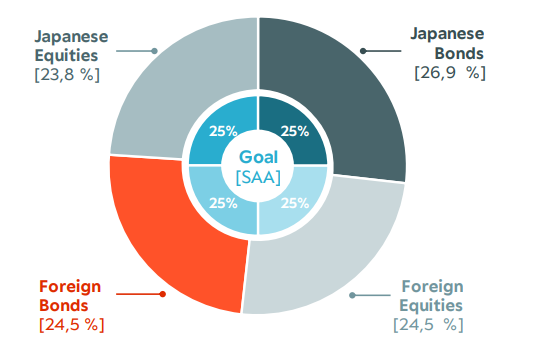
Fig. 3: But that wasn't always the case: Abe’s historic reforms triggered a massive shift away from domestic bonds
GPIFs bond allocation over the past 13 years
Equities, Bonds, and FX: Winners and Losers of Japan’s repatriation efforts
The primary beneficiaries of the Takaichi administration’s repatriation plans will undoubtedly be Japanese government bonds, which are poised to receive substantial support from strengthened domestic investor demand. Additionally, the Yen is highly likely to emerge as another major medium-term winner of this structural reallocation. Reversing decades of capital outflows – which heavily fueled the Yen’s persistent depreciation in recent years (see Fig. 4) – promises to provide the currency with a structural tailwind.
Whether and to what extent Japanese equities will benefit from Takaichi’s reallocation plans remains highly uncertain. While domestic stock markets, like their fixed-income counterparts, should enjoy stronger investor demand, this tailwind faces a formidable headwind in the form of a potentially appreciating Yen. For Japan's highly export-oriented corporate sector, a rapid surge in the currency would be particularly damaging ("poison"). It would erode foreign-currency earnings when translated back into Yen, thereby undermining the competitiveness of Japanese exporters. However, should the Yen appreciate more gradually over an extended period, this negative impact, while noticeable, would likely remain contained – especially since other growth-oriented policies from the Takaichi administration could partially offset the drag of a stronger currency.
Ceteris paribus, international equity markets are likely to suffer from the potential capital outflows. Any reallocation by the GPIF would primarily affect US equities, which currently comprise roughly 65% of the fund’s foreign stock portfolio. However, it remains highly questionable whether the Japanese government would significantly reduce its global equity allocation in a strategic portfolio overhaul. From both a return-generation and, more importantly, a diversification perspective, international equities remain highly attractive for the GPIF (and other sovereign pension funds).
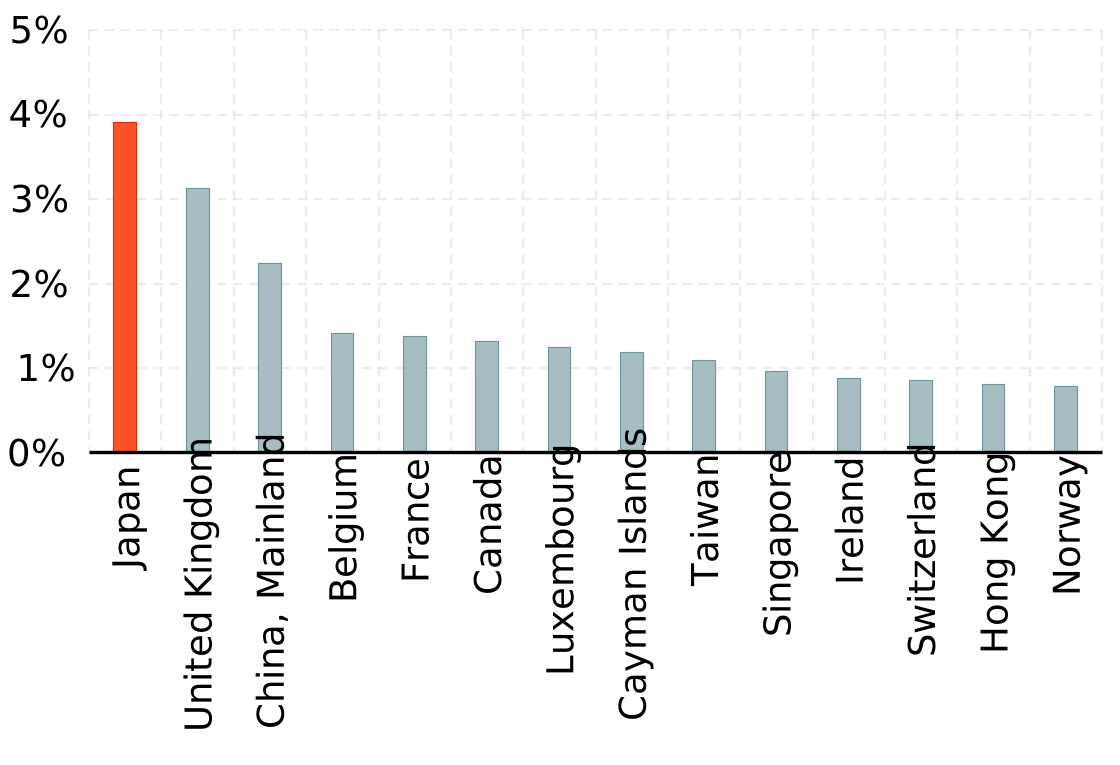
The bond markets in the rest of the world are likely to face the bigger challenge. After decades of massive capital exports, Japanese investors have become some of the most critical creditors to major industrialized nations. Today, they hold nearly 4% of the entire US Treasury market (see Fig. 5). European sovereign debt has also been highly popular among Japanese institutional buyers; the GPIF alone holds slightly over 1% of the entire German Bund market. Consequently, a significant reduction in Japanese holdings across global bond markets has the potential – at least on paper – to structurally drive-up global sovereign term premiums. The ultimate magnitude of this interest rate effect will depend heavily on the actual volume of the repatriation flows.
Fig. 4: Years of domestic capital flight have structurally weakened the Japanese Yen
Cumulative inflows from Japan into foreign bond markets (in USD Billions)
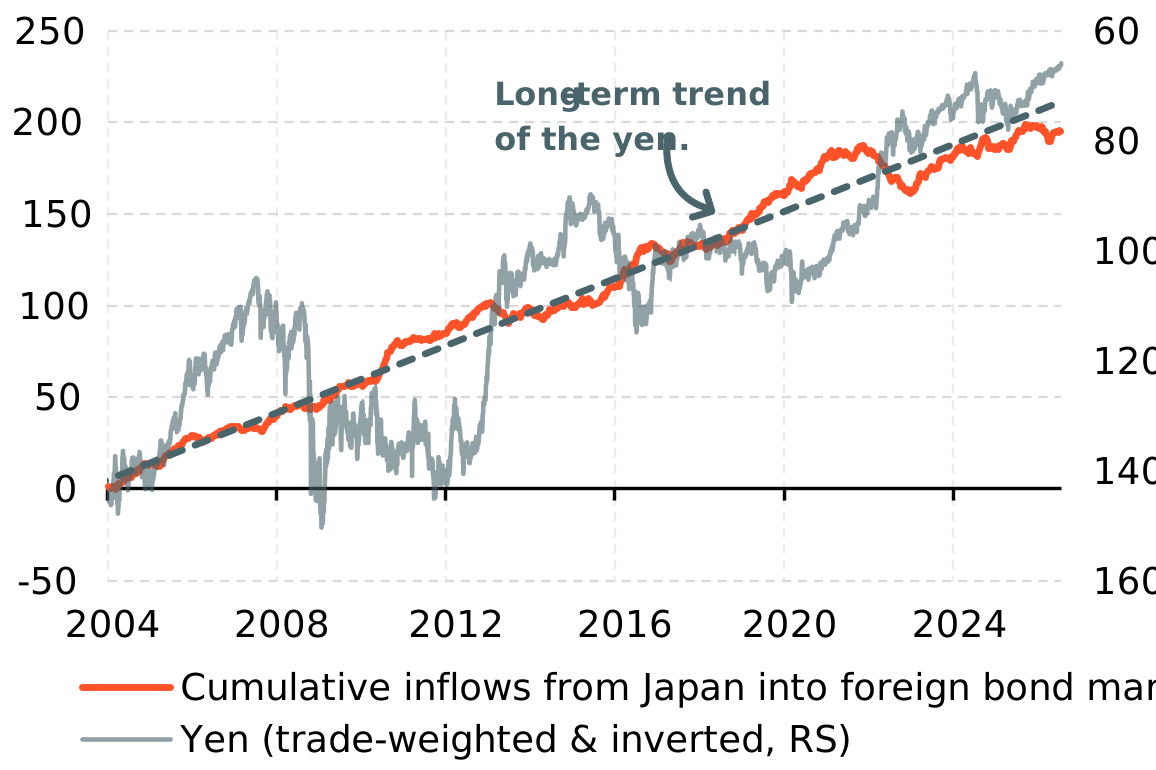
Fig. 5: After massive accumulation over the past decade, Japan remains the largest foreign holder of US sovereign debt
Foreign holdings of US Treasuries as a percentage of the Treasury Market
How much will Japan's potential investment turnaround cost global bond investors?
The ramifications of Japan's investment shift are unlikely to remain confined to the domestic bond market. Should the Takaichi administration push to lower the foreign bond allocation back to levels seen prior to Shinzo Abe’s reforms, it would force the pension giant to divest approximately $280 billion in foreign fixed-income holdings. The lion's share of this divestment – nearly $140 billion – would likely target US Treasuries, which currently constitute roughly 50% of the GPIF’s international bond portfolio. However, European sovereign debt markets would also face substantial selling pressure. Under this scenario, the GPIF would have to liquidate nearly $18 billion in German Bunds – a highly significant sum for the German debt market.
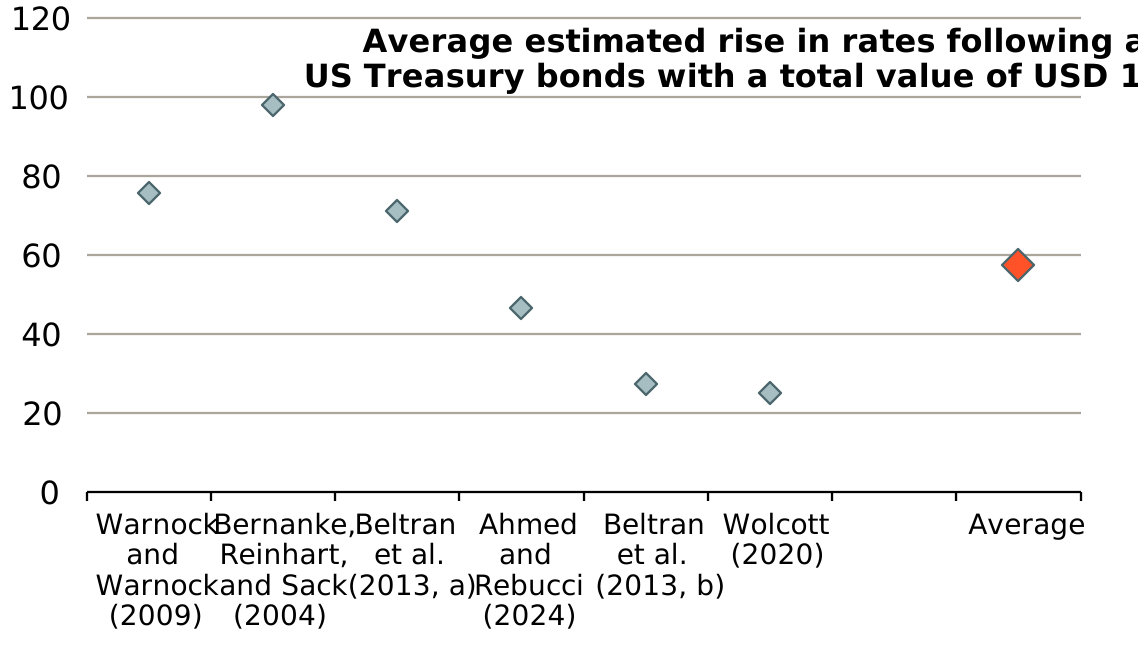
If these outflows from international fixed-income markets are not absorbed by other investor groups, the net effect will be to drive yields structurally higher on a global scale. A meta-study by the Kansas City Fed¹ aggregating various prior research papers suggests that foreign treasury sales of this magnitude would push US Treasury yields up by 45 to 65 basis points. Crucially, the headwind for global bond markets stems not only from these direct rebalancing sales but also from the structural loss of ongoing Japanese bid support and the absence of coupon reinvestments.
The extent to which the direct and indirect effects of Japan’s investment shift will drive up domestic yields depends on several variables and will only unfold over time. Minor or gradual adjustments² to the GPIF's asset allocation – such as halting the reinvestment of maturing bond proceeds or reducing the international bond quota to the currently permitted minimum of 20% – would likely exert only marginal pressure on fixed-income markets (see Fig. 6). However, at least on paper, a structural realignment of the Japanese pension giant has the potential to act as a significant drag on bond performance, reinforcing existing global headwinds like rising sovereign debt and mounting inflation risks.
Fig. 6: GPIF quota realignment threatens major disruption for global fixed income
Estimated GPIF net divestment by sovereign bond market following foreign quota reduction
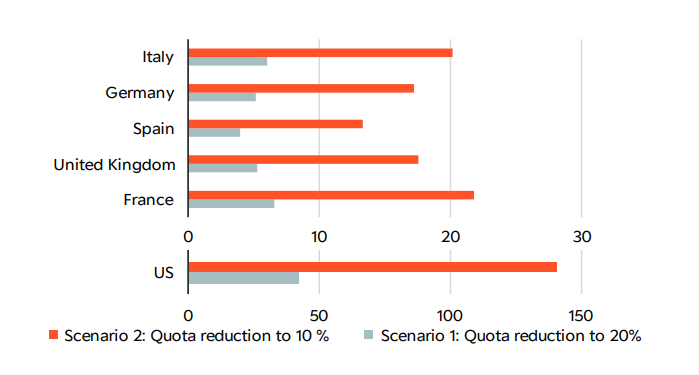
Fig. 7: Global rate markets set to feel the heat of international selling pressure, estimates show
Sizing a potential yield shock: The impact of a potential $140bn US Treasury divestment by international investors
Japan’s investment shift offers domestic opportunities but also global risks
A fundamental regime shift is looming over the global investment landscape, driven by the latest policy blueprints of the Takaichi administration. For decades, Japanese investors have channelled vast funds into foreign bond markets. Now, Japan’s government is aiming to incentivize these investors to repatriate their capital and redirect it back into the domestic financial markets.
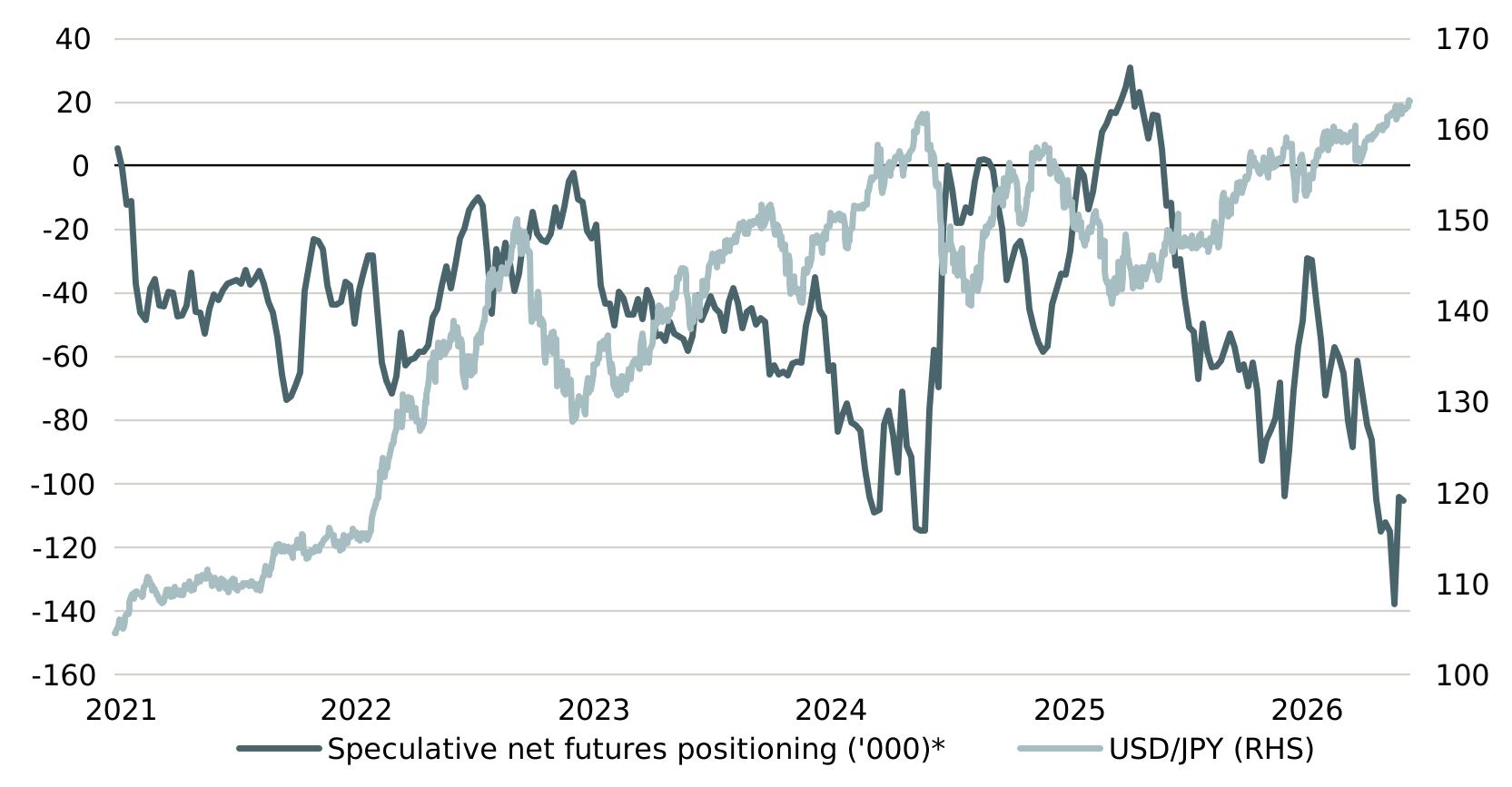
In the short term, this potential investment turnaround, coupled with a rapid appreciation of the Yen, could trigger severe market volatility – reminiscent of the events in Summer 2024. During that episode, a rate hike by the Bank of Japan coinciding with a weak US labor market report sparked a violent rally in the Japanese currency. This swiftly unwound the highly popular “Yen-Carry-Trade”, where investors borrow cheaply in low-yield jurisdictions like Japan to invest in high-yield assets abroad, running structural Short-Yen positions in the process. The resulting losses forced widespread, cross-asset deleveraging to manage overall portfolio risk, culminating in a systemic volatility shock across the entire multi-asset spectrum. Given today's historically stretched bearish positioning on the Yen, a sudden currency rally remains a potent risk factor for global markets (see Fig. 8).
Over the medium term, the Yen and Japanese government bonds stand out as the clear beneficiaries of this repatriation drive. Conversely, global bond markets – which have historically enjoyed a significant tailwind from Japanese bid support – face a structural risk. Indeed, the sheer scale of potential rebalancing flows from Japan’s GPIF has the capacity, at least on paper, to drive global bond term premiums structurally higher.
The ultimate speed and scale of these repatriation plans will only crystallize over the coming months. To date, Japanese institutional investors have kept their foreign bond allocations largely intact. Nonetheless, this looming pivot adds to existing structural pressures on global fixed income, including mounting sovereign debt burdens³ and elevated inflation (volatility).⁴ Against this fragile backdrop, we continue to see very limited upside for global government bonds. In contrast, Japanese assets – particularly on an unhedged currency basis – are set to become increasingly attractive for investors as the Takaichi administration's repatriation agenda gathers momentum.
Fig. 8: Speculative net positioning on the Yen approaching extreme territories
Speculative net futures positioning on the Japanese Yen
Publisher

Ulrich Urbahn
Ulrich Urbahn is a CFA charterholder and, for many years, was part of one of the world’s top three multi-asset research teams in the renowned Extel survey. After earning degrees in economics and mathematics from Heidelberg University, he spent more than ten years at Commerzbank, where he worked, among other roles, as a Senior Cross-Asset Strategist. He has been with Berenberg since October 2017 and heads the Portfolio Management Liquid Alternatives & Solutions as well as the Multi Asset Strategy & Research departments. In addition, he is a voting member of the Investment Committee and is responsible for capital markets communication.
Editors