
The current market environment presents investors with a new challenge: How do I protect my portfolio against stock market drawdowns when they are almost always accompanied by sell-offs in the bond market? In fact, the classic 60/40 portfolio¹ lost nearly 5% of its value in March – the sharpest decline since 2022. This was due to stocks and bonds both experiencing a significant downturn in the wake of the Iran crisis.
In an environment of correlated stock and bond markets, allocations to gold and commodity stocks offer one way to diversify multi-asset portfolios. However, as we will show in this Focus article, liquid alternatives can also serve as a diversifier, thus acting as an additional building block to make multi-asset portfolios more robust.
The Rise of Liquid Alternatives
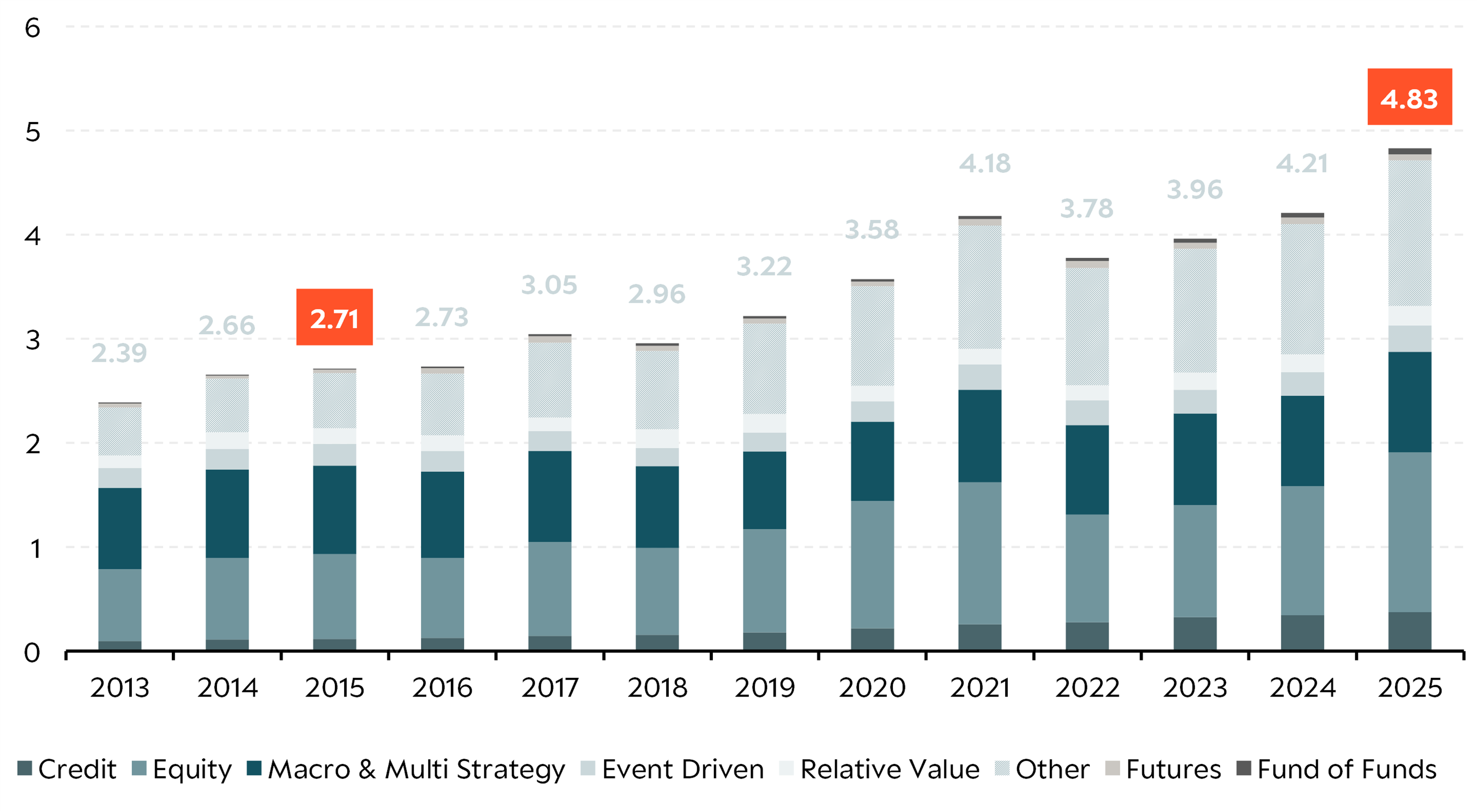
The term "Liquid Alternatives" has evolved into one of the most widely discussed concepts in the fund industry over the past few years – and for good reason. By the end of 2025, liquid alternatives managed assets of nearly USD 5 trillion in the US alone – almost double the amount from 10 years prior (Fig. 1). But it's not just in the US that liquid alternatives have grown in significance. The assets under management in alternative funds within the European UCITS market have also increased considerably in recent years.
However, the umbrella term "Liquid Alternatives" encompasses a heterogeneous landscape of strategies that differ significantly in their mechanics, sources of return, and risk profiles. At their core, the relevant approaches can be divided into hedging and diversifying strategies.²
Fig. 1: Liquid Alternatives have almost doubled their assets since 2015
AuM (in Bn. USD) of Liquid Alternatives in the US by calendar year, based on SEC filings
The former appreciate during periods of market stress due to their negative correlation with risky assets, and aim to generate positive returns during crises. The latter seek to improve the risk/return profile of traditional investments by maintaining the lowest possible correlation to them. An example of a diversifying strategy is Global Macro. Such a strategy aims to generate positive returns regardless of the current market trend by capitalizing on macroeconomic mispricings – a factor that is particularly popular with investors in the current market environment.
Positive stock bond correlations pose new challenges for investors
With the end of the pandemic, and certainly since the beginning of the current inflationary regime, markets have been facing a new challenge: the synchronous movement of stocks and bonds. Setbacks on the equity side of a multi-asset portfolio are now frequently accompanied by sell-offs on the bond side - meaning the loss mitigation hoped for from stock-bond diversification doesn’t materialize. Indeed, with only two exceptions, every equity sell-off since 2022 has also been accompanied by a drop in bonds (Fig. 2).
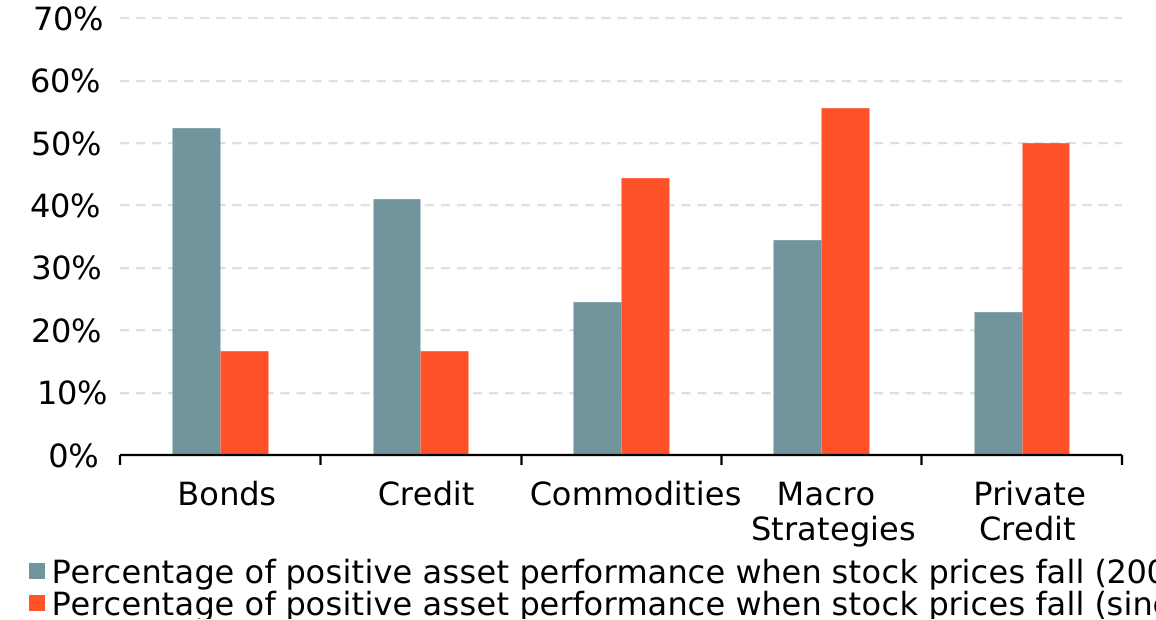
Commodities offer a potential alternative for investors. In fact, major equity market downturns have recently often coincided with strong performance from gold, oil, and other commodities (Fig. 3). Therefore, in addition to other structural drivers, we continue to view gold, as well as commodity-related equities, as an indispensable component for our multi-asset portfolios.
But there are also other options are available. Liquid alternatives can also act as a portfolio diversifier. Whether it's rising interest rates, growth shocks, or geopolitical disruptions, the very drivers behind the major equity market downturns of recent years represent promising investment opportunities for Global Macro and other liquid alternative strategies. Indeed, during the equity market pullbacks of the last few years, Macro strategies - along with other segments of the alternatives complex - have tended to generate positive returns.
Fig. 2: Bonds have provided virtually no protection against stock market setbacks over the past four years
Monthly return of equities (x-axis) vs. bonds (y-axis)
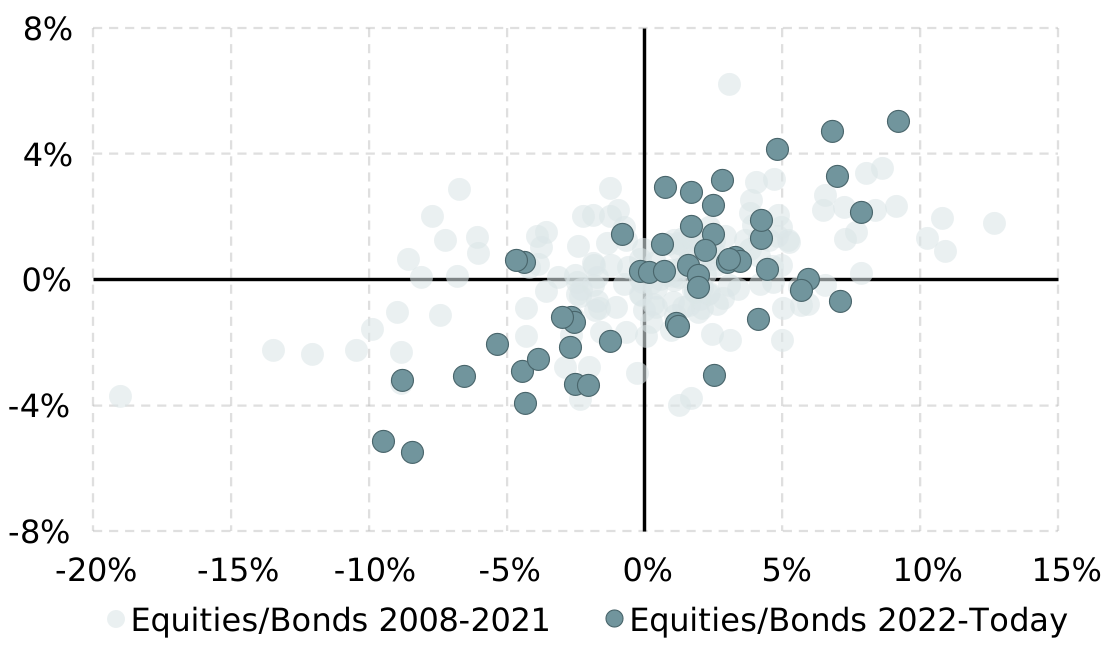
Fig. 3: Meanwhile, the role of macro strategies and other alterna-tives has expanded markedly
%-share of positive months when stocks sold off during respective month
Not a silver bullet: Liquid Alternatives struggled in the low-interest environment
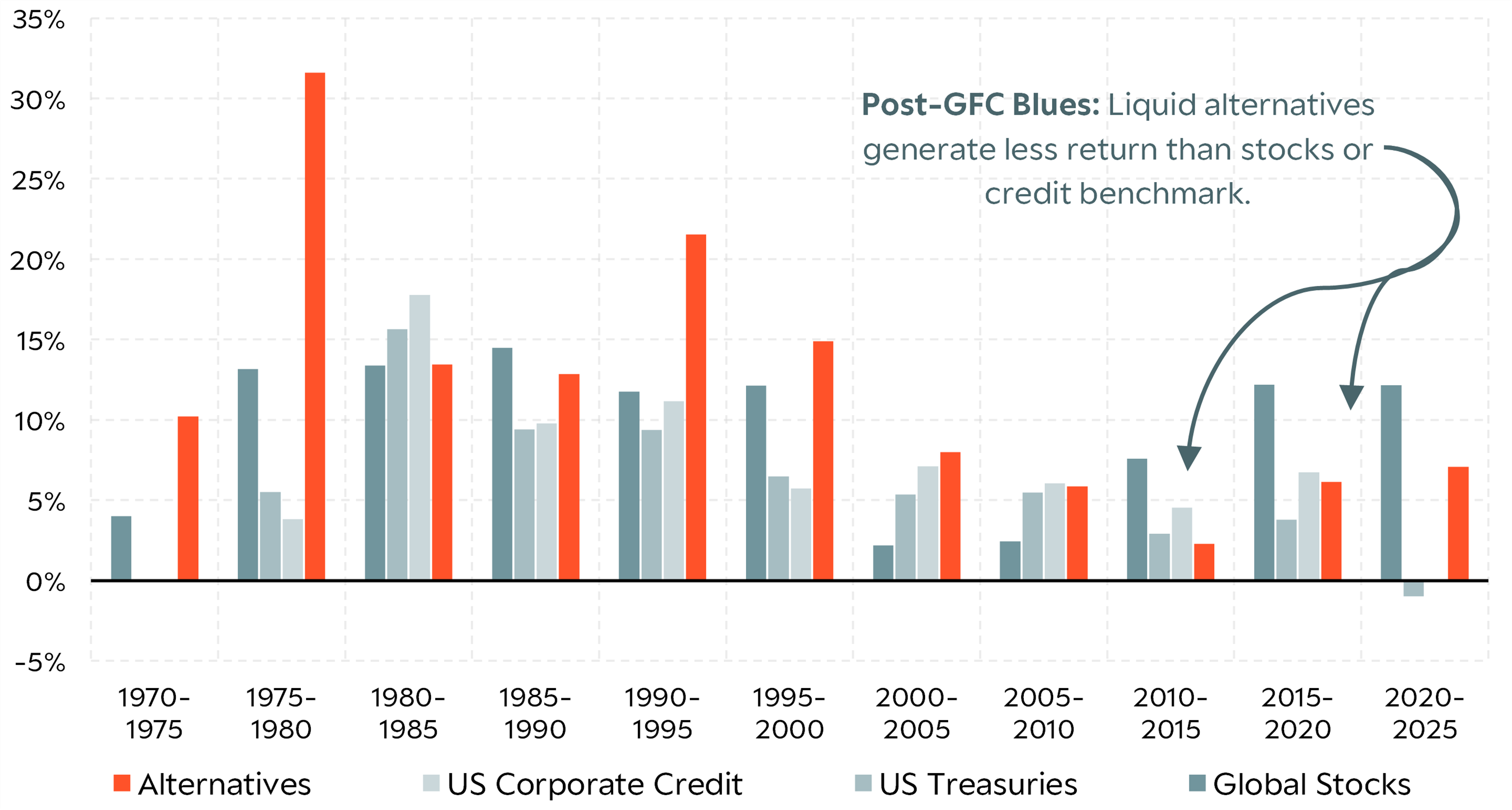
The hedge fund and liquid alternative strategies of the 1980s and 1990s were able to attract investors with what felt, in some cases, like fairytale returns. The high-interest-rate environment combined with an enormous cross-asset volatility helped these strategies achieve profits. However, in the new millennium, and certainly by the time of the low-interest-rate era after the financial crisis, this came to an end. Indeed, the sophisticated hedge fund strategies underperformed equities and corporate bonds in the 2010s. Between 2010 and 2015, liquid alternatives even generated a lower return than safe U.S. government bonds.
The upshot is that liquid alternatives are not an all-weather solution for investors. Depending on the market environment, they can perform better - or worse. We believe, however, that the current market environment is likely to be more advantageous for liquid alternatives.
Fig. 4: Liquid Alternatives generally underperformed during the 2010s
Based on the total returns of the individual market segments over 5-year periods
A supportive backdrop for Liquid Alternatives
One factor that is likely to benefit Macro funds and other liquid alternative strategies is current elevated level of interest rates. Figure 5 compares the performance of alternatives against the interest rate of 3-month T-Bills. Indeed, on average, alternatives have historically generated higher returns when short-term interest rates were higher. The reason for this relationship between interest rates and performance is, admittedly, relatively unsurprising: It should be significantly easier for Global Macro and other liquid alternatives to generate 4% per year when money market rates are already at 3% (or more).
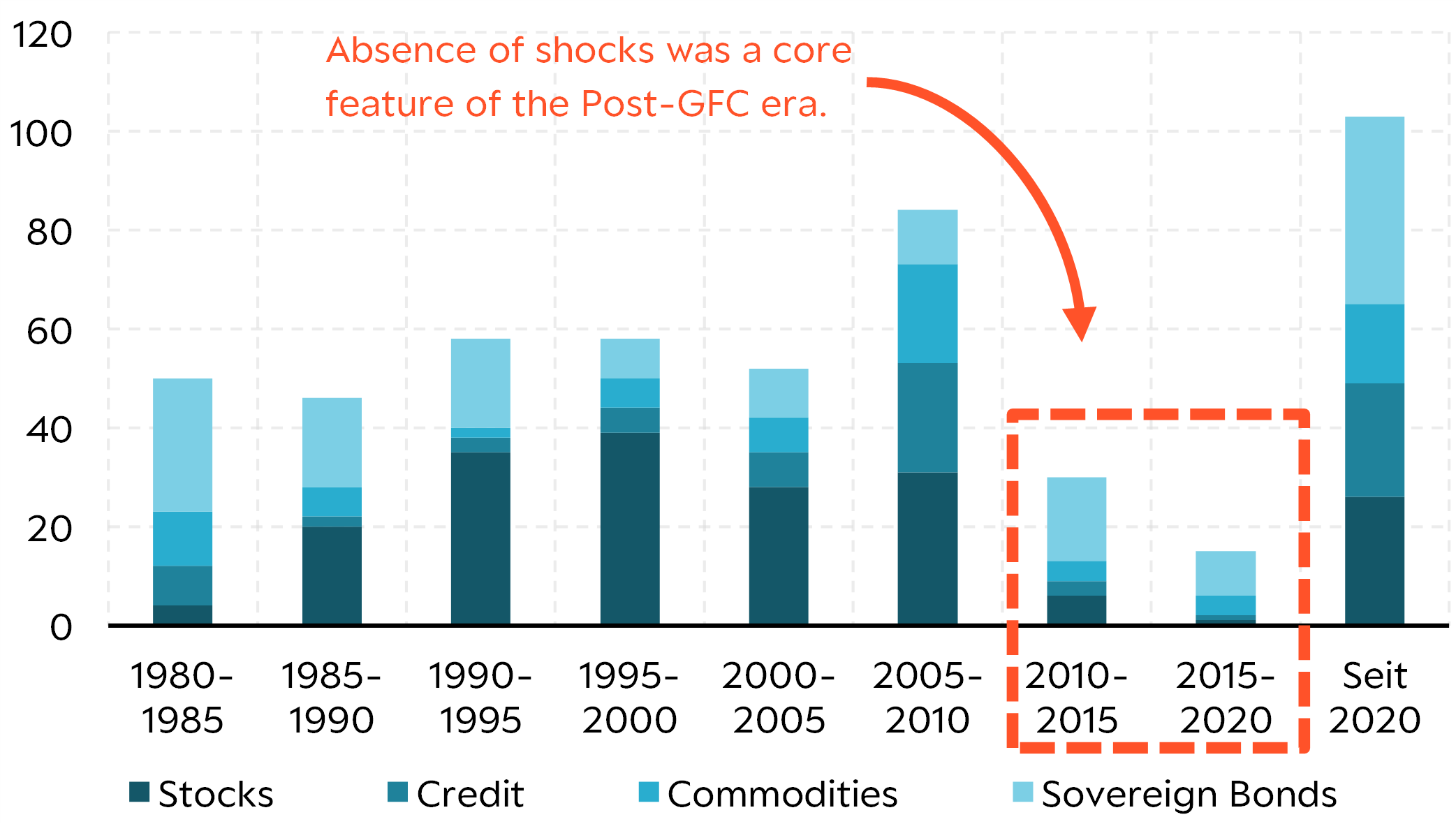
In the macroeconomic environment following the Global Financial Crisis (GFC), the absolute performance of liquid alternatives therefore suffered from the lower money market rates. Additionally, the extremely loose monetary policy of central banks suppressed market volatility. While strong market fluctuations present challenges for investors who are closely aligned with a benchmark, they offer opportunities for Global Macro funds and other opportunistic liquid alternatives to profit from market mispricings. In the period after the GFC, extreme events - and thus opportunities to generate excess returns - were rather scarce. In addition to low interest rates, this placed an additional burden on liquid alternatives.
The end of the pandemic marked the conclusion of the “low vol – low rates” era. Even more importantly, a return to such an environment appears to be quite unlikely. Increased populism and its associated fiscal stimulus programs, inflationary risks from potential tariffs, or the recent crisis in Iran: at present, little suggests that markets are set to return to a low-interest-rate regime in the medium term. Moreover, in addition to the current geopolitical chaos, the rise in passive investment flows is leading to more pronounced market swings, which should sustain volatility - independent of central bank actions. Consequently, the tailwinds from higher interest rates and greater volatility for Global Macro and other liquid alternatives are unlikely to abate in the medium term.
Fig. 5: Higher rates saw better liquid alts performance
Annual performance of liquid alternatives aggregated according to the respective level of 3M US Treasury Bills at that point in time
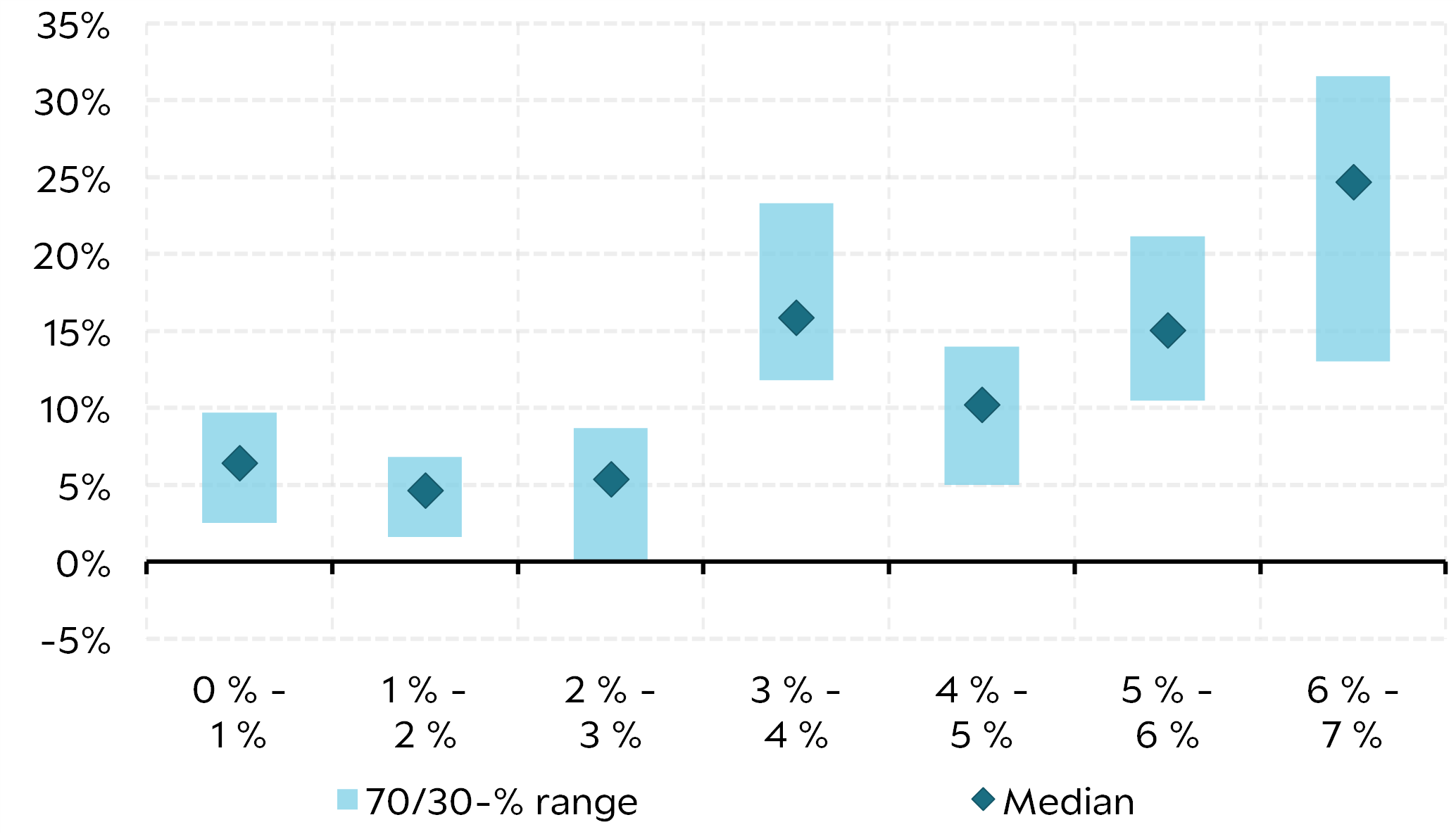
Fig. 6: More market vol to provide more opportunities
Number of monthly %-changes exceeding 2.5 Sigma relative to histo-ry per asset class based on an universe of approximately 50 individ-ual assets .
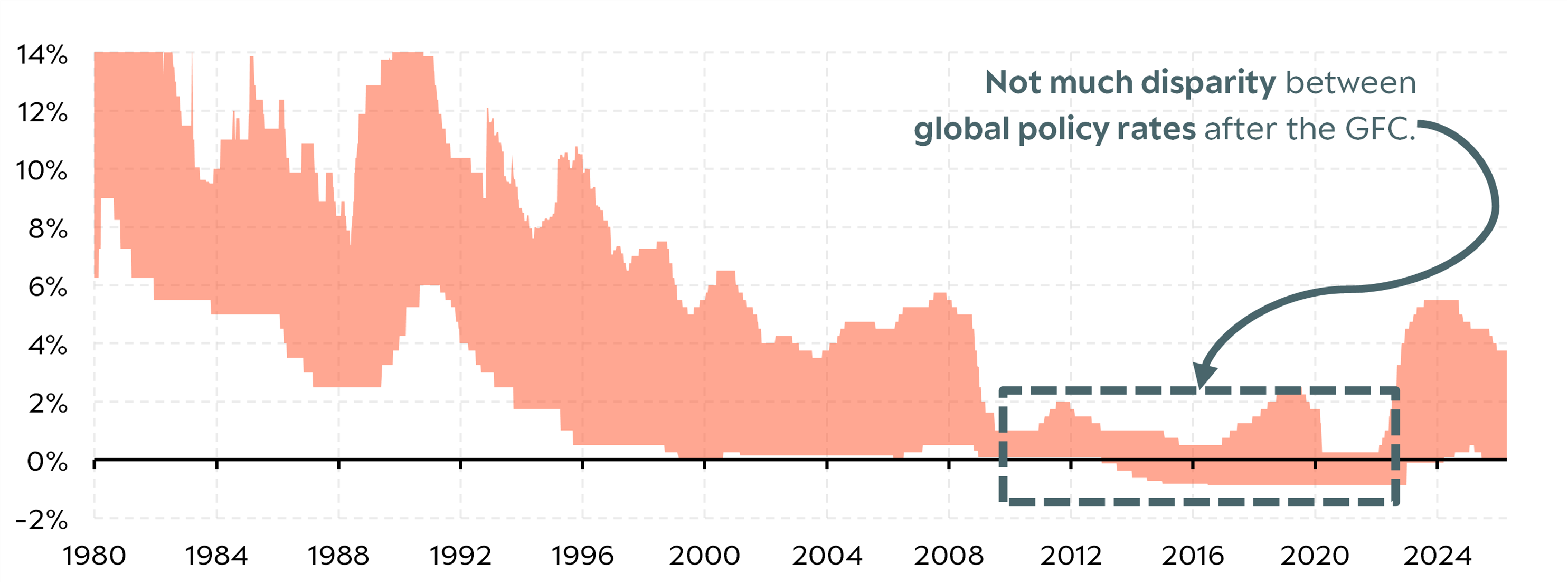
An additional factor that could enhance the performance of Global Macro strategies is not just the absolute level of interest rates, but also the differentials between the various economies. For instance, money market rates in Australia are approaching 4%, whereas the Swiss National Bank has maintained its key interest rate near the zero bound for the better part of last year. Such a significantly wider dispersion in money markets now presents Macro funds with new opportunities to capitalize on global interest rate differences or to boost performance through carry strategies. This was considerably more challenging in the period immediately following the financial crisis when most central banks kept their policy rates near zero. In combination with higher money market rates and greater market volatility, the current economic disparity further contributes to this favorable market environment for Global Macro and other Liquid Alternatives
Fig. 7: A larger disparity between economies could help liquid alternatives further
Difference between the lowest and highest central bank policy rate across G10 economies
Conclusion: Liquid alternatives as a building block for multi-asset portfolios
Traditional portfolio construction, based on exclusively stocks and bonds, is facing substantial challenges within the current macroeconomic environment. Persistently higher inflation and its associated volatility, coupled with heightened interest rate fluctuations and rising correlations between these conventional asset classes, have significantly eroded the diversification benefits of bonds, which for decades acted as a dependable counterbalance to stocks.
In this transformed landscape, liquid alternatives are poised to become an essential cornerstone, alongside commodities, for building resilient investment portfolios. While the low-interest-rate era of the past decade presented obstacles for certain alternative strategies, the current market climate is considerably more advantageous. Ongoing geopolitical uncertainties, elevated interest rates, and widening disparities among national economies are fostering a compelling environment for Global Macro and other liquid alternative strategies.
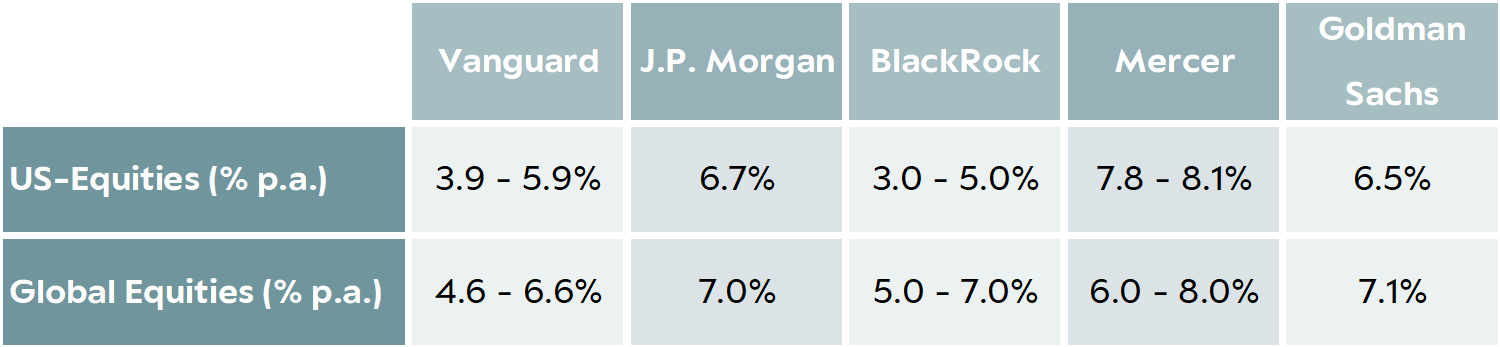
Also taking into account markedly lower return expectations from equities, investors are compelled to seek out new sources of yield. In this pursuit, liquid alternatives are set to emerge as a particularly compelling investment vehicle.
Fig. 8 : Expected equity returns are significantly lower than in the last decade
Long-run stock market return expectations from select banks and asset managers
Publisher

Ulrich Urbahn
Ulrich Urbahn is a CFA charterholder and, for many years, was part of one of the world’s top three multi-asset research teams in the renowned Extel survey. After earning degrees in economics and mathematics from Heidelberg University, he spent more than ten years at Commerzbank, where he worked, among other roles, as a Senior Cross-Asset Strategist. He has been with Berenberg since October 2017 and heads the Portfolio Management Liquid Alternatives & Solutions as well as the Multi Asset Strategy & Research departments. In addition, he is a voting member of the Investment Committee and is responsible for capital markets communication.
Editors