
For the past two weeks, the war in Iran has been almost the only topic relevant to financial markets. Even the smallest news from the Persian Gulf affects equity and bond markets via the oil price. This is unlikely to change, at least in the short term. Therefore, with this publication, we want to provide a guide on how investors can position themselves for escalation or deescalation scenarios.
De-escalation or escalation? Developments in Iran drive financial markets
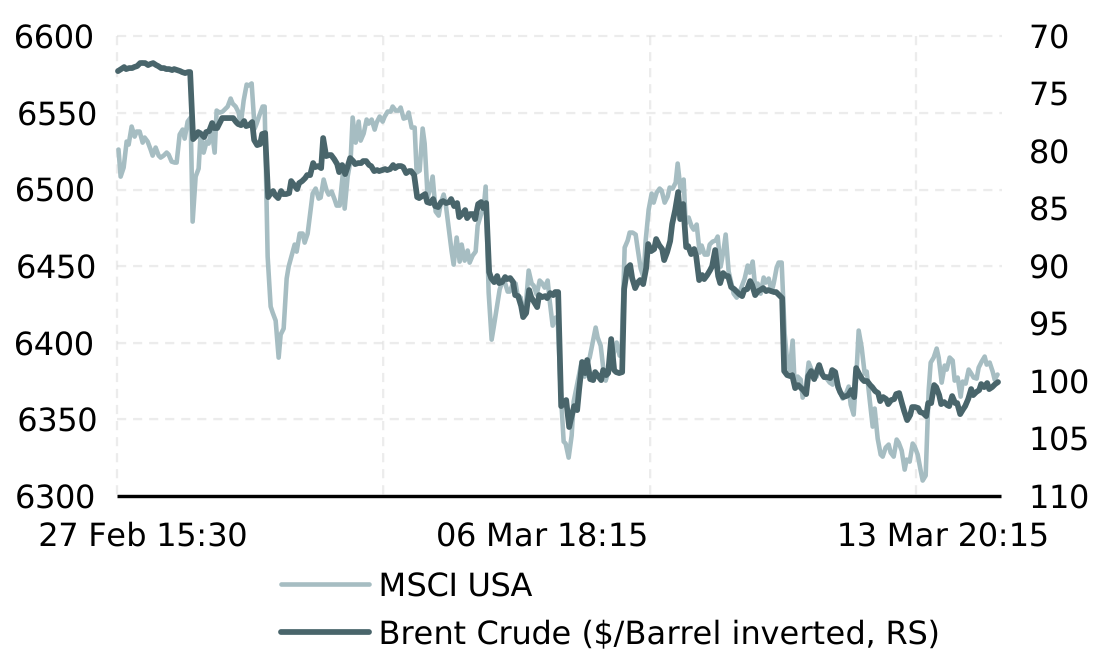
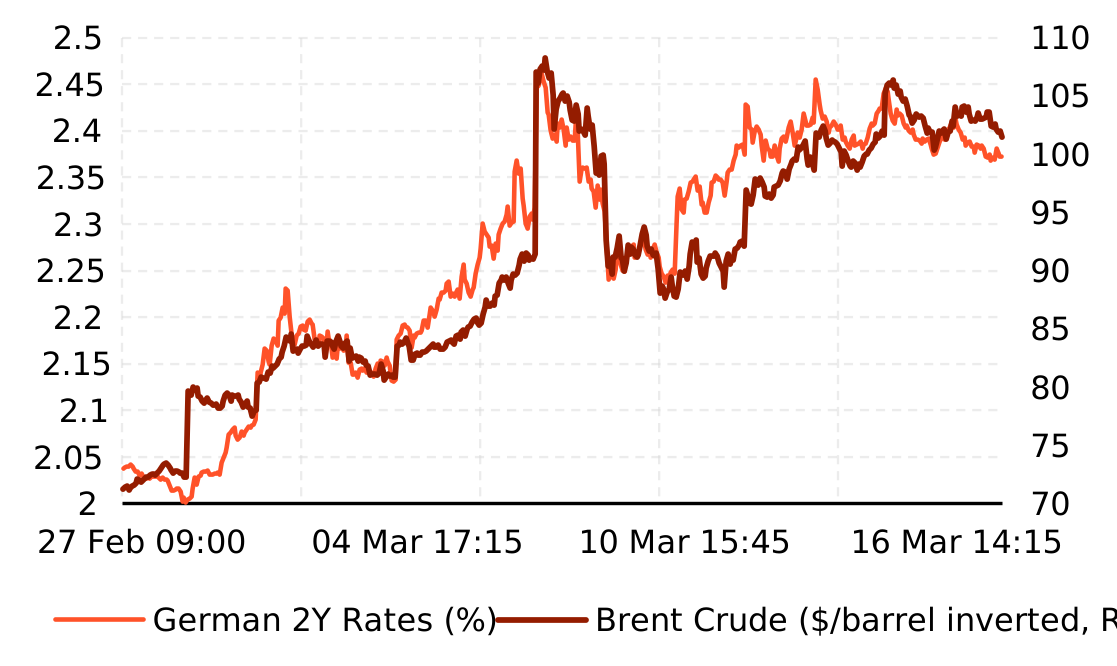
Since the beginning of the war, the oil price has become the most important variable for equity and bond markets. If the situation in Iran escalates - as it did at the end of last week when US forces bombed Kharg Island - oil prices rise as stock and bond markets fall. If Trump suggests a swift end to the war, oil as well as rates fall, while equity markets recover. Even the smallest changes in Brent affect stocks and bonds markets around.
Markets will continue to be dominated by whether the situation in Iran cools down or heats up even further. In the event of a further escalation, shipping in the Strait of Hormuz could be impaired for several months, while Iran intensifies its attacks on neighboring countries. In such a scenario, we expect oil prices to break the 2022 highs and soar well above the $150 mark, which would further intensify the sell-off in stocks and bonds seen over the past couple of weeks.
More positive scenarios envision a cooling of the conflict, in which the Strait of Hormuz becomes fully passable for global shipping again in the coming weeks. A significant rise in oil prices above the $120 mark would then be avoided. In this environment, stocks and bonds are likely to rapidly recover some of the losses from the past weeks.
The oil price is driving both equity markets…
Intraday performance of US equities (MSCI USA) und Brent crude oil
…as well as the bond markets!
Intraday performance of 2 year German bonds and Brent crude oil
De-escalation seems a bit more likely, at least from a political perspective
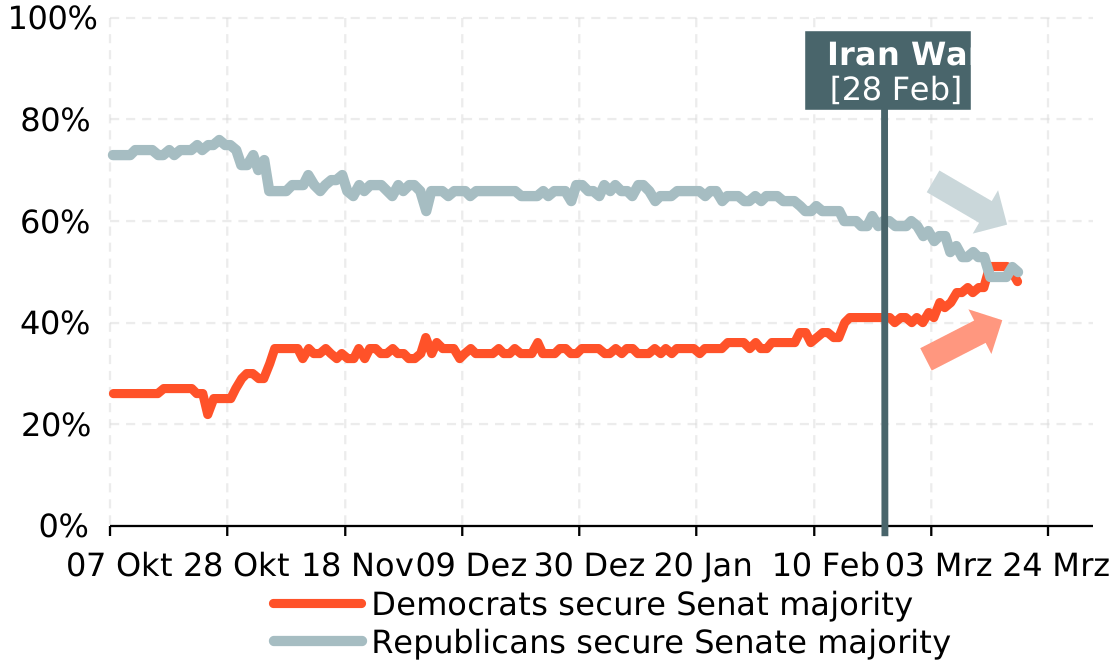
For the Trump administration, domestic pressure to end the war in Iran is mounting. The US military operation in Iran is relatively unpopular among the American population and is already harming the Trump administration's approval ratings. This is reflected, among other things, in the betting markets, which now expect the Democrats to win both chambers of Congress - the House of Representatives and the Senate - in the upcoming midterm elections in November. Before the conflict, the Republicans' chances of holding at least one of the two chambers looked relatively good.
The declining popularity of the Grand Old Party is likely related to the rising cost of living. Diesel prices in the US have recently climbed to their highest level since 2022. But the war affects consumers not only at the pump: the increased prices for fertilizers are also likely to lead to higher food prices in the medium term.
Given the voters' frustration with the high cost of living, which was already palpable before the war broke out, President Trump thus has a strong incentive to prevent a further unwelcome price increase and to de-escalate the war in Iran quickly.
But careful: markets face a setback should deescalation doesn’t materialise
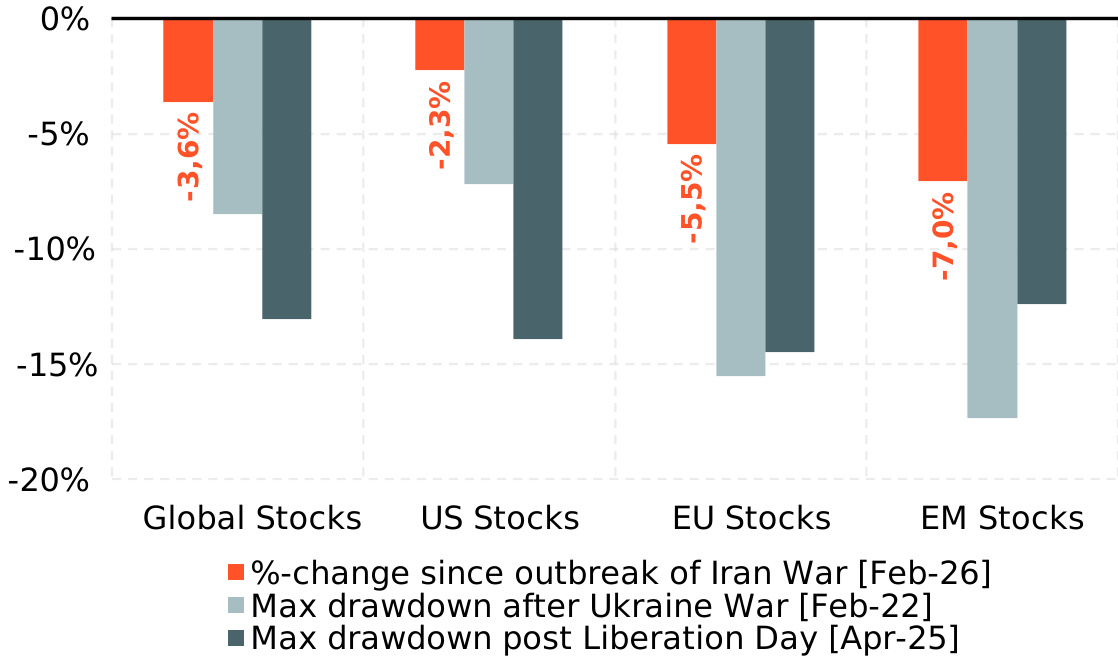
So far, markets are not pricing in a bigger economic turmoil. However, should the latter materialise, equities have more downside. The energy price shock triggered by the war in Iran and the effective closure of the Strait of Hormuz has already led to a significant setback in the stock markets. European stocks have fallen by more than 5% since the outbreak of the war, while Emerging Markets lost almost 7% since February 27. For less energy-dependent countries like the US, the loss has been more or less moderate. If the situation in Iran eases, there is potential, especially for hard-hit stocks, to price out geopolitical risks and quickly make up for some of the recent losses.
Compared to previous economic shocks, the current stock market route seems relatively slim. For example, the sell-offs after the Ukraine war or Trump's "Liberation Day" were significantly sharper. This indicates that the markets are not yet fully pricing in major economic disruptions or "worst-case scenarios". Should oil prices rise significantly again, investors should therefore brace themselves for further stock market losses.
Democrats now have a chance to secure control of the senate
Polymarket probability of winning for the mid-term election result
Equities are not pricing in any major disruptions caused by Iran
Maximum drawdown in the two months following geopolitical events
Nevertheless, investors should not underweight equities at the moment
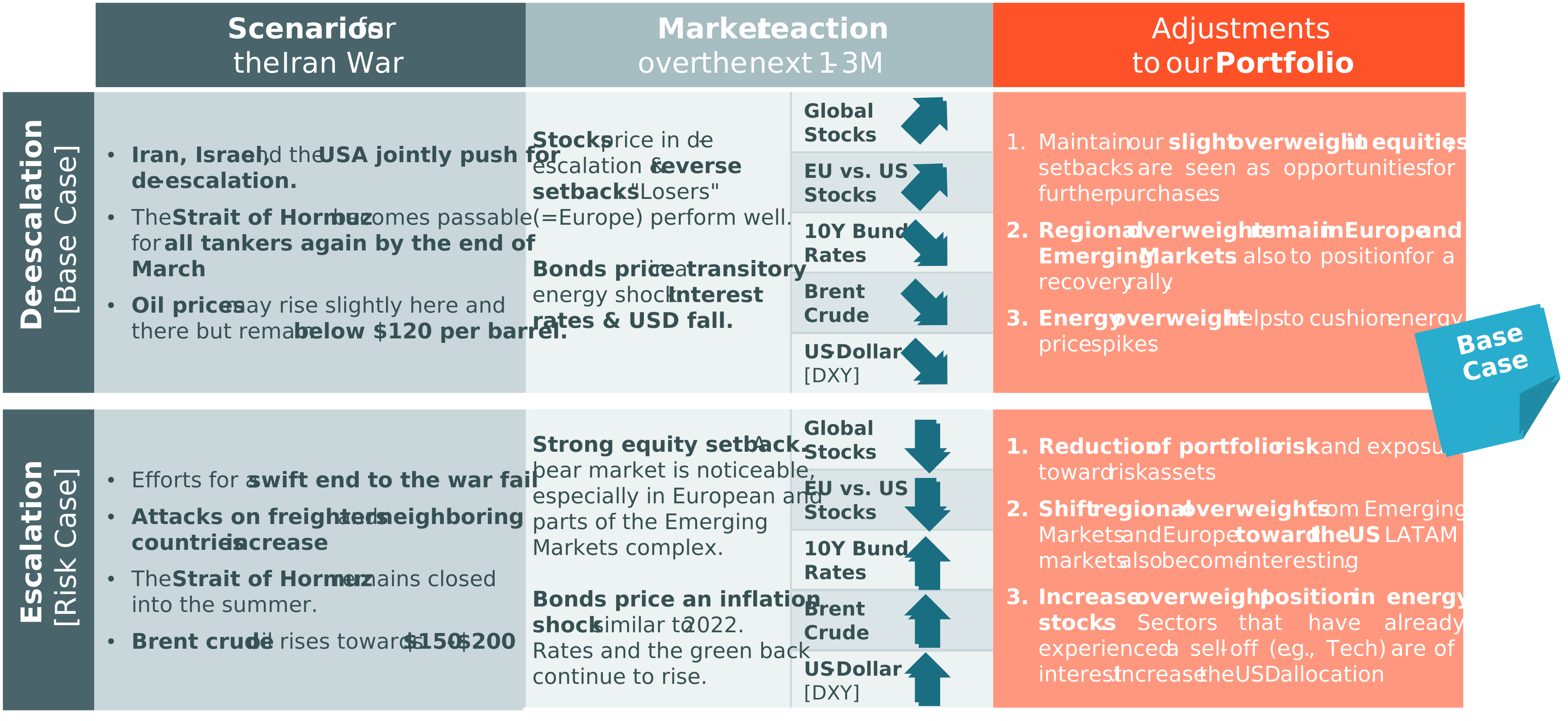
In the following graphic, we summarize our expectations for the two central scenarios in the Iran war. Our base scenario remains that the conflict will cool down (somewhat) in the foreseeable future and that the stock markets will reverse the sell-off of the last two weeks. To position for such a recovery rally, we would keep our equity allocation above our benchmark. Markets that have suffered particularly from the oil price shock, such as European or emerging market equities, are likely to lead such a counter-movement. Therefore, these markets remain interesting as regional overweights. At the same time, we remain overweight in oil stocks to cushion energy price spikes and balance our portfolio.
However, if it becomes apparent that the Strait of Hormuz will remain closed not just for weeks but for months, portfolios would need to be positioned more defensively. On a regional level, a reallocation in favor of the US and other energy-exporting markets such as Latin America would be sensible. Bonds are likely to continue to lose value in this scenario and would still not represent a "safe haven" for investors. However, we currently see no acute need to position for such an escalation scenario.
Our strategy guide for escalation and de-escalation scenarios in the Iran war
Authors

Ulrich Urbahn
Ulrich Urbahn is a CFA charterholder and, for many years, was part of one of the world’s top three multi-asset research teams in the renowned Extel survey. After earning degrees in economics and mathematics from Heidelberg University, he spent more than ten years at Commerzbank, where he worked, among other roles, as a Senior Cross-Asset Strategist. He has been with Berenberg since October 2017 and heads the Multi Asset Strategy & Research as well as the Portfolio Management Alternatives departments. In addition, he is a voting member of the Investment Committee and is responsible for capital markets communication.