
Investment Strategy
The fund management focuses on companies with convincing structural growth and high long-term earnings. These companies are based in Emerging Asian countries, but often operate globally. Based on fundamental stock selection, companies are selected that achieve durable growth over long periods of time with high profitability. Investments are made primarily in large caps as well as high-growth smaller and medium-sized stocks. The decisive criteria for these business models are high entry barriers, growing or cyclically attractive end-markets and excellent management teams.
- Concentrated portfolio of about 45 stocks
- All cap approach, i.e. exploiting investment opportunities across all market segments
- Long-term investment horizon
- Benchmark-agnostic approach
Learn more about our investment philosophy in equity fund management
Fund data
| ISIN | LU2491196288 |
|---|---|
| WKN | A3DN78 |
| Inception date | 10.03.2026 |
| Issue price (10.09.2026) | 118.75 EUR |
| Redemption price (10.09.2026) | 118.75 EUR |
| Fund volume | 153.42 Mio. EUR |
| Share class volume | 21.71 Mio. EUR |
| Currency Fund / Share Class | USD / EUR |
| Minimum investment | 10,000,000.00 EUR |
| Asset Manager | Joh. Berenberg, Gossler & Co. KG |
| Management company | Universal-Investment-Luxembourg S.A. |
| Custodian | BNP Paribas Luxembourg Branch |
| Use of income | Accumulating |
| End of financial year | 31.12. |
| Registration and Distribution | DE, AT, CH |
Costs
| Issue surcharge | none |
|---|---|
| Flat-rate fee p.a. | 0.75% |
| Total Expense Ratio (TER) p.a. | 0.86% |
| Performance fee | Up to 10% vs MSCI All Country Asia ex Japan |
Chances and risks
| Chances | Risks |
|---|---|
| High potential returns from equities in the long term. Growth stocks, small caps, and specific sectors, countries, or market segments may outperform the market in certain phases.Improvement of the risk/return profile through individual stock analysis and active management.Stabilization of assets in negative capital market phases through professional risk management and intelligent diversification. | Fluctuations in value and price losses from stocks and the potential use of derivatives are possible – both overall and in individual stock market years. |
| Attractive growth prospects in emerging markets. | Growth stocks, small caps, and specific sectors, countries, or market segments may underperform during certain periods. |
| There is no guarantee of success for individual stock analysis and active management. | |
| Investments and transactions in foreign currencies are subject to exchange rate risks. | |
| Increased price fluctuations and risks of loss or default are possible when investing in emerging markets. |
Further details on the opportunities and risks of this fund can be found in the sales prospectus.
Currencies
Sectors
Countries
Asset classes
Top Holdings
Monthly market comment
Global equity markets reached new highs in August, supported by solid economic data, while geopolitical tensions and restrictive Fed signals added to volatility. The Berenberg Emerging Asia Focus Fund outperformed its benchmark in August. Positive contributors to performance were Asia Vital Components (AVC), APR and Samyang Foods. AVC rose on its own earnings beat, while Nvidia's AI outlook further lifted the chip supply chain, APR posted a strong quarter on North America/Europe growth, with Medicube performing strongly and the margin target holding despite higher costs, and Samyang Foods posted sharp margin expansion and robust overseas growth, supported by an interim dividend. Detractors, meanwhile, were BSE, Tencent and International Container Terminal Services (ICTSI). BSE fell after a Jefferies downgrade citing lower options turnover and reduced earnings estimates, Tencent's second quarter ended its multi-year run of double-digit profit growth as heavy AI investment pushed cash flow negative, and ICTSI, despite an earnings beat, was weighed down by trade-volume concerns amid US-Iran tensions around the Strait of Hormuz.
Portfolio Management

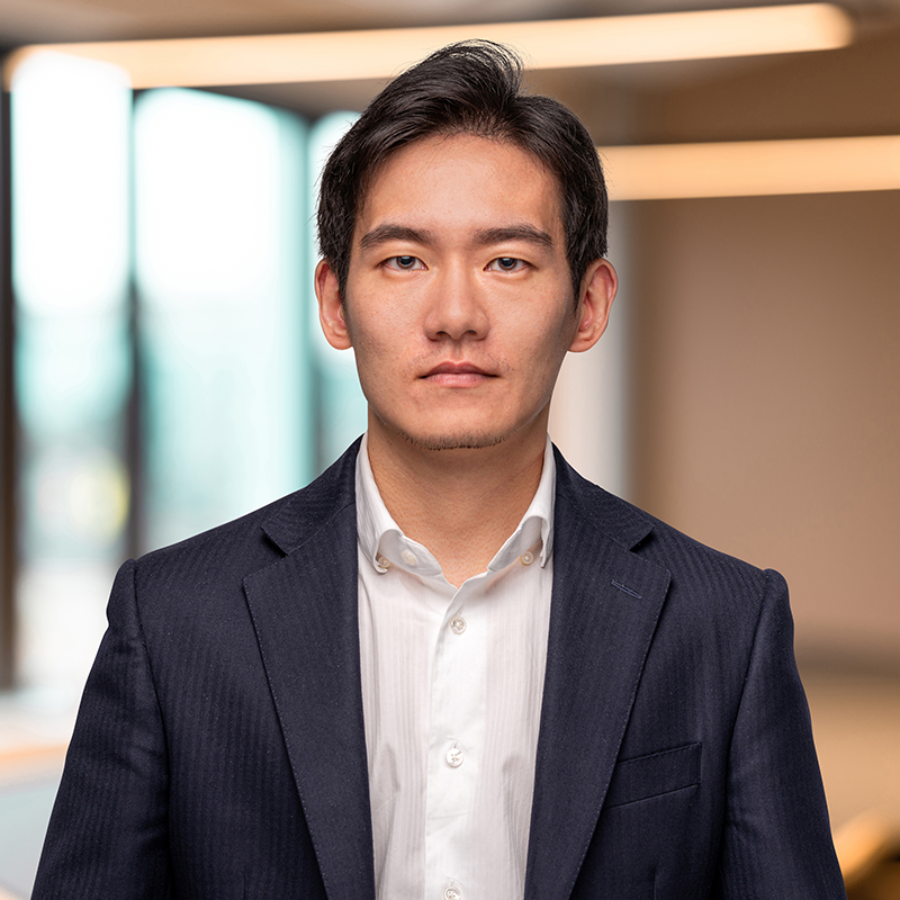
Javier Garcia
Javier Garcia has been a portfolio manager at Berenberg since October 2022. He began his investment career in 2002 at Julius Baer Asset Management (later Swiss & Global Asset Management), where he became Co-Manager of the JB Global Emerging Markets Equity Fund in 2006 and additionally served as Lead Fund Manager of the JB Black Sea Fund and the JB Russia Stock Fund from 2009 onwards. From 2013 to 2022, he has been Senior Portfolio Manager Emerging Markets Equities at UBS Wealth Management. In this role, he built and managed the Global Emerging Markets and Asian Equities business. Javier Garcia holds a Bachelor in Business Administration and Economics from the University of Zurich and is a CFA Charterholder.

Dr. Jianan He
Jianan He has been a portfolio manager at Berenberg since July 2023. She started her career in 2020 at ODDO BHF Asset Management, where she was a Quantitative Equity Analyst focusing on multi-factor investment strategies for global and emerging equity markets. Jianan He holds a PhD in empirical finance from the Technical University of Darmstadt and is a CFA Charterholder.
CO₂-Intensity
The fund does not actively manage its carbon footprint, however, emissions data such as CO2 intensity are relevant parameters which can be used to assess the efficient management of a company and the extent of transition risks.
ESG Score
The data provider MSCI ESG uses an ESG score of 0 to 10 to assess the management of material ESG risks of portfolio holdings compared to competitors.
ESG Controversies Screen
Investments in the fund are monitored for ESG controversies and, with the help of MSCI ESG data, flagged according their severity. Thereby, potential ESG risks of investments are identified. In the case of an orange flag (severe controversy), we enter into an active exchange with the company. In the case of a red flag (very severe controversy), the company is excluded.