Investment Strategy
It is aimed at investors seeking return opportunities through interest income, hedging and tactical opportunities, particularly in falling markets. In this way, the fund aims to help investors diversify their equity investments. The fund combines fundamental and macroeconomic analysis with quantitative models in a discretionary investment approach. The strategy aims to deliver positive returns with low drawdowns and volatility over 12-month periods, a negative correlation to falling equity markets and a low correlation to "normal" equity markets. These objectives meet the needs of investors seeking steady returns, protection during market downturns and the potential for gains when opportunities arise.
Fund data
| ISIN | DE000A3D9HK3 |
|---|---|
| WKN | A3D9HK |
| Inception date | 01.11.2023 |
| Issue price (06.03.2026) | 102.98 EUR |
| Redemption price (06.03.2026) | 99.98 EUR |
| Fund volume | 164.27 Mio. EUR |
| Share class volume | 1.13 Mio. EUR |
| Currency Fund / Share Class | EUR / EUR |
| Minimum investment | - |
| Asset Manager | Joh. Berenberg, Gossler & Co. KG |
| Management company | Universal-Investment-Gesellschaft mbH |
| Custodian | BNP Paribas S.A. Niederlassung Deutschland |
| Use of income | Accumulating |
| End of financial year | 31.12. |
| Registration and Distribution | DE, AT, CH |
| SFDR Classification (Sustainable Finance Disclosure Regulation) | Article 6 |
Costs
| Issue surcharge | Up to 3.00% |
|---|---|
| Flat-rate fee p.a. | 1.55% |
| Total Expense Ratio (TER) p.a. | 1.57% |
| Performance fee | 15% of the return above a money market investment with interest according to €STR with High Watermark. |
Chances and risks
| Chances | Risks |
|---|---|
| Attractive return potential over the medium to long term | High volatility of shares, riskier bonds and currencies, price losses possible |
| Above-average performance by exploiting investment opportunities across regions and asset classes, with a focus on attractive market segments and structural investment themes | Unit value can fall below the purchase price at which the client acquired the unit |
| Potential for additional returns through active and opportunistic management | No guarantee of success due to active and opportunistic management |
| The conclusion of index and currency futures for quota control can increase the risk of loss, at least temporarily |
Further details on the opportunities and risks of this fund can be found in the sales prospectus.
Indexed performance
Performance in 12-month periods
Monthly performance
| Year | Jan | Feb | Mar | Apr | May | Jun | Jul | Aug | Sep | Oct | Nov | Dec | YTD |
|---|---|---|---|---|---|---|---|---|---|---|---|---|---|
| 2023 | - | - | - | - | - | - | - | - | - | - | 0.00 | 0.43 | 0.43 |
| 2024 | -0.28 | -0.70 | -0.03 | 0.76 | -0.55 | 0.08 | 0.26 | 0.07 | -0.10 | 0.21 | -0.38 | 0.70 | 0.04 |
| 2025 | -0.31 | 0.40 | 1.10 | 0.63 | -0.33 | -0.28 | -0.26 | -0.34 | -0.40 | -0.20 | -0.12 | -0.34 | -0.45 |
| 2026 | -0.17 | -0.29 | - | - | - | - | - | - | - | - | - | - | -0.04 |
Source: Berenberg, Management company
The charts and tables regarding performance shown here are based on own calculations according to the method developed by the German Investment Funds Association (BVI). They illustrate past performance. Future performance can deviate both positively and negatively from these calculations. Gross performance (BVI method) takes into account all charges at fund level (e.g. management fee), net performance plus the issue surcharge. Additional charges can arise for individual investors (e.g. custody account fees, commissions and other fees). Model calculation (net): An investor wants to purchase fund units for EUR 1,000 EUR. Considering a max issue surcharge of 3.00% he has to payEUR 30.00 for the purchase. Also, fees may be charged for the administration of the safe custody account, which will lower the performance. Past performance is not a reliable indicator of future performance.
Performance after issue surcharge
| 1 year | -0.99% |
|---|---|
| since inception | -0.02% |
Source: Berenberg, Management company | State: 6 Mar 2026
Risk figures
| Volatility - 1 year | 2.14% |
|---|---|
| Maximum Drawdown - since inception | -3.29% |
Currencies
Sectors
Countries
Asset classes
Top Holdings
Monthly market comment
New year, same themes: geopolitical chaos, the next act in the Trump tariff drama, and rising global government spending – the first trading days of the year have impressively demonstrated that the major issues of 2025 will continue to occupy investors in 2026. However, the stock markets appear unfazed by this turbulence and, after brief pullbacks, are trading near their all-time highs again; Europe is once again leading the way at the start of the year. Realized volatilities remained low at just 10% and 12% for the S&P 500 and the Euro Stoxx 50, respectively. Due to the multitude of uncertainties, implied volatilities, on the other hand, remained supported, and volatility premiums were therefore relatively high. For example, the VIX briefly rose above 20 in the wake of Trump's acquisition plans for Greenland. In this environment, the Berenberg Guardian posted only a slightly negative return of 9 basis points, thus falling below its expected costs. Monetization was not opportune for the pullbacks of less than 3% lasting less than a week. In January, the Guardian primarily bought structures with low vega (e.g., put flies) due to the higher volatility premium.
Portfolio Management
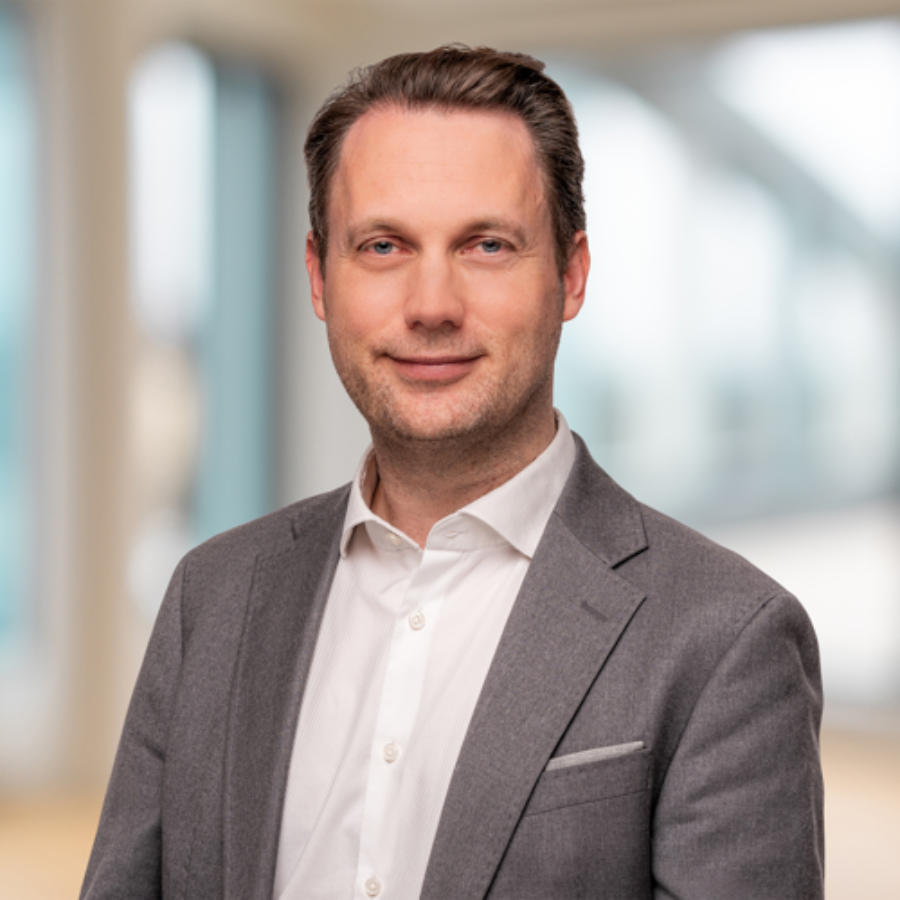
Ulrich Urbahn
Ulrich Urbahn is a CFA charterholder and, for many years, was part of one of the world’s top three multi-asset research teams in the renowned Extel survey. After earning degrees in economics and mathematics from Heidelberg University, he spent more than ten years at Commerzbank, where he worked, among other roles, as a Senior Cross-Asset Strategist. He has been with Berenberg since October 2017 and heads the Multi Asset Strategy & Research as well as the Portfolio Management Alternatives departments. In addition, he is a voting member of the Investment Committee and is responsible for capital markets communication.
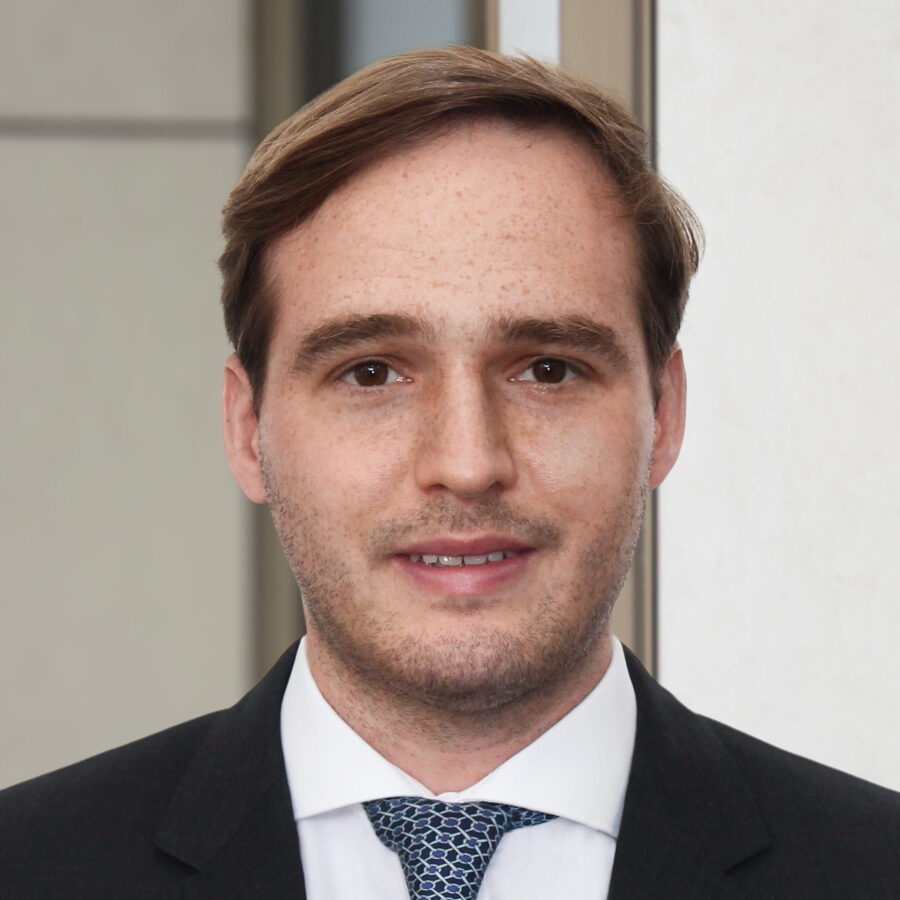
Philipp Loehrhoff
Philipp Löhrhoff joined Berenberg in 2021 and is a portfolio manager in the Multi Asset team. In his previous roles he worked closely with institutional investors to structure, develop and place bespoke hedging and investment solutions. He is an expert for quantitative investment strategies as well as cross asset solutions with a particular focus on equity and fixed income. He spent several years at Goldman Sachs, BNP Paribas and Natixis in London. Philipp holds a Master‘s degree in Finance and Economics and a Bachelor’s degree in Econometrics and Mathematical Economics from the London School of Economics and Political Science (LSE).
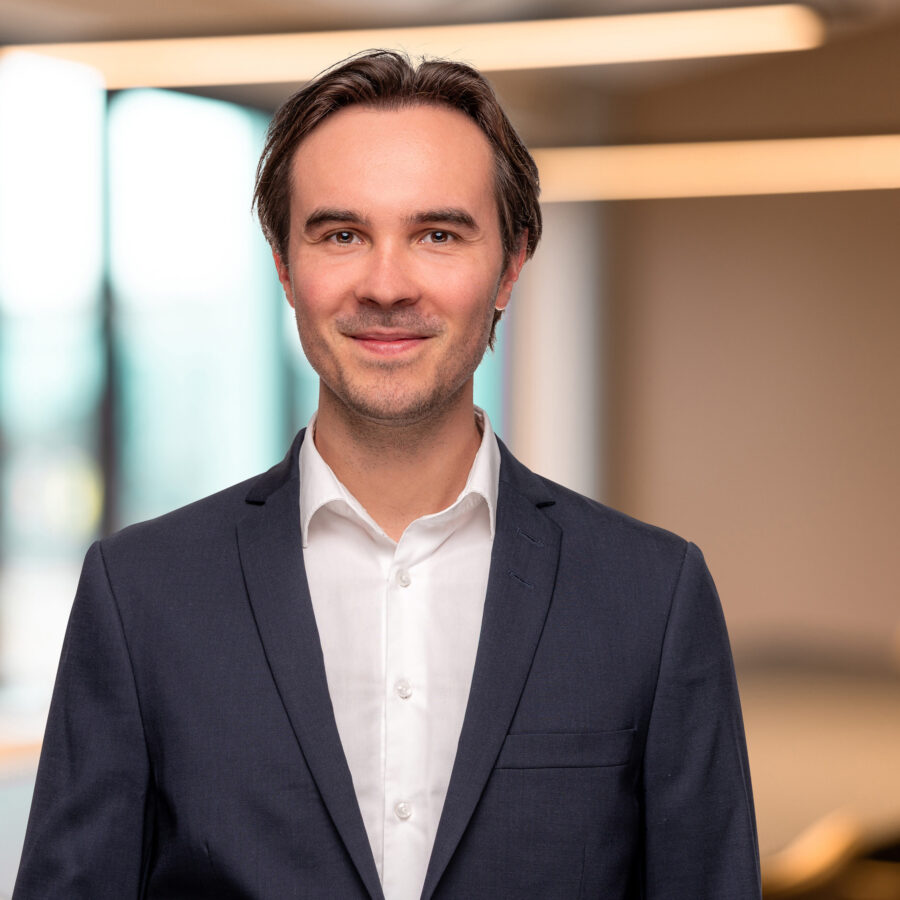
Ludwig Kemper
Ludwig Kemper has been working as a strategist since 2019 and as a portfolio manager since 2021 at Berenberg’s Multi Asset unit. His responsibilities include the generation of investment ideas and the preparation of analyses to support investment decisions. Ludwig focuses on the commodities sector and derivatives markets. Previously, he completed a dual study programme at Berenberg in cooperation with the Hamburg School of Business Administration. In his rotations, he worked in investment banking, equity research and asset management. He received his Bachelor's degree as valedictorian of his class. Ludwig is a CFA charterholder.