
In a nutshell
In nominal terms, government bonds are becoming attractive again, although this is subject to regional differences, expected inflation and exchange rate fluctuations.
Corrections in European corporate bonds could offer entry opportunities, particularly in the high-yield segment.
The bond market environment is, and remains, politically driven
As if inflationary tariffs, rising government debt and a change in the chairmanship of the US Federal Reserve were not enough, the outbreak of the war with Iran on the last day of February added yet another item to the list of uncertainties in the bond markets. Government and corporate bonds have so far reacted differently to this, with the latter faring better. Will this trend continue, or are we set to see a shift in favour?
Little headroom for safe government bonds in the medium-term
The successful start to the year for high-grade government bonds was abruptly halted by the outbreak of war in the Middle East. The military escalation of the conflict and the blockade of the Strait of Hormuz posed a threat to energy supplies, causing oil prices to soar. Government bonds quickly priced in the emerging inflationary risks, with the yield on ten-year German government bonds reaching 3.1% in March and even 3.2% in the second quarter – the highest level in 15 years. Although US Treasury yields did not match their (more recent) 2023 highs over the same period, they also rose significantly and temporarily broke through the 4.6% mark. Central bank interest rate cuts, which markets had still been hoping for at the start of the year, were priced out of the market, and expectations were reversed. In fact, against a backdrop of inflation rising to over 3%, the ECB raised its key interest rate by 25 bp in June. However, our economists do not anticipate any further interest rate hikes. Nevertheless, we see little upside potential in government bonds in the medium term. This is because, despite the easing of tensions in the Middle East, yield trends in the Eurozone and the US are likely to reflect the elevated level of inflation – alongside abating macroeconomic headwinds.
Forecasts: base interest rates and government bond yields (in %)
Berenberg and consensus forecasts compared, figures for end of 2026 and mid of 2027
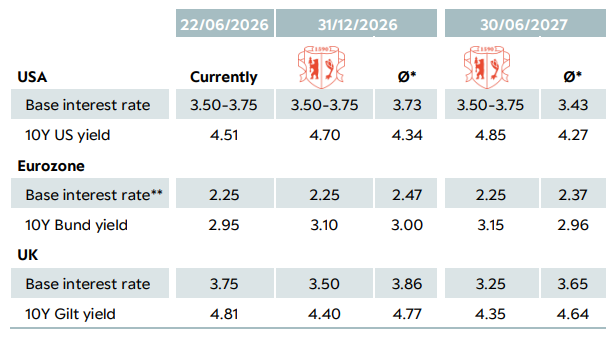
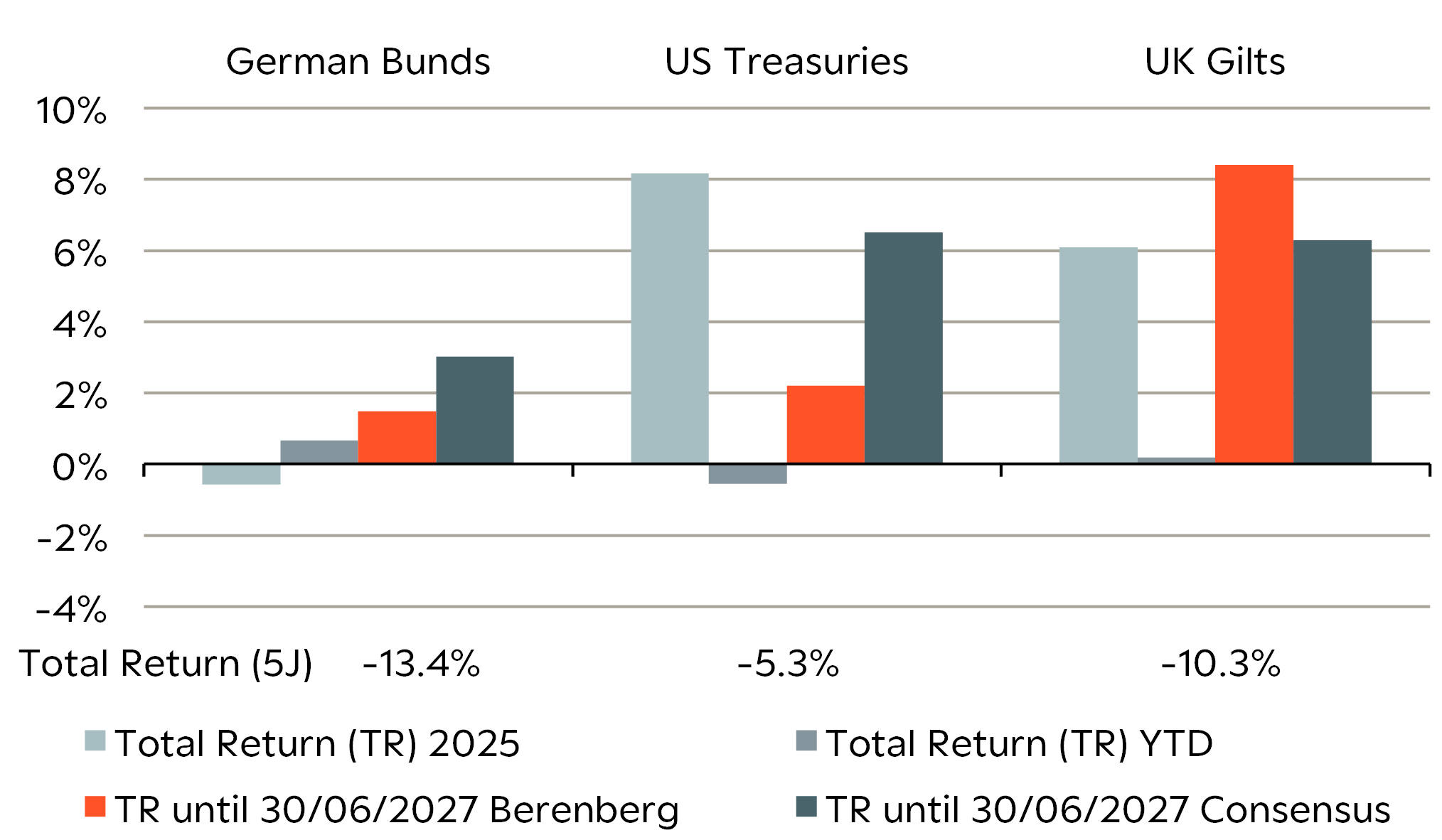
Given a potentially less hawkish BoE and the higher base yield on gilts, the nominal return prospects for the UK are clearly the highest over a one-year horizon compared with the other two regions – provided the Labour Party manages to maintain fiscal discipline in the UK despite internal power struggles. In real terms, however, expected inflation must be taken into account; from a euro perspective, the possibility of exchange rate fluctuations must also be considered. German Bunds and US Treasuries, meanwhile, remain largely unattractive despite improved nominal prospects.
Safe government bonds: UK remains regional favorite
Performance of 10-year government bonds, total effect of price/yield changes, coupon income and roll-down effect
Corporate bonds remain in the fast lane
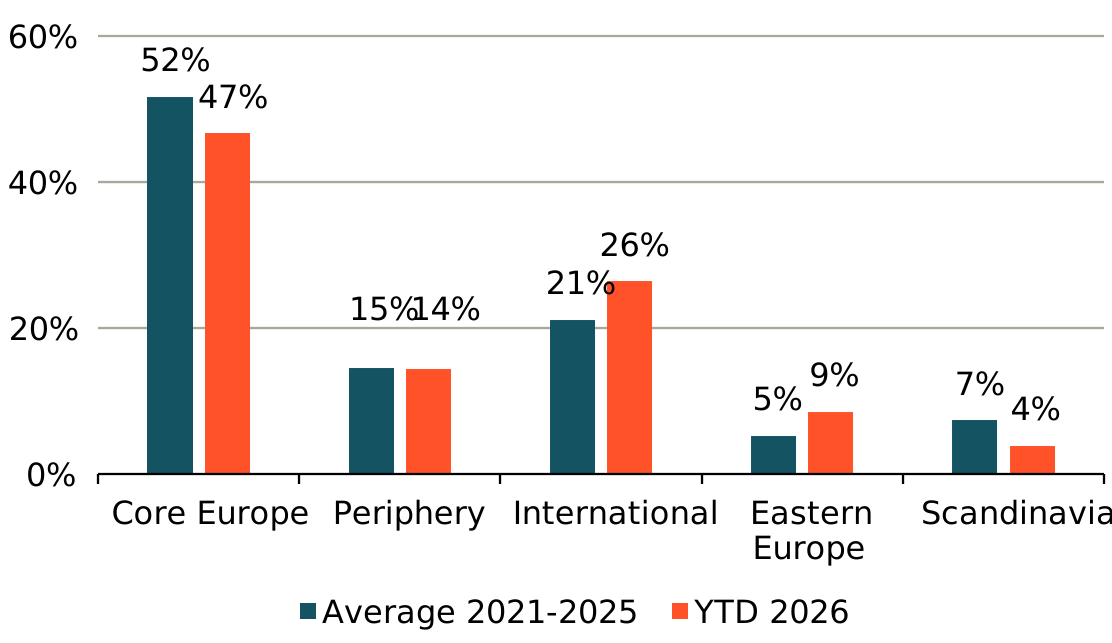
Since the start of the year, corporate bonds have outperformed government bonds, a trend largely attributable, at index level, to the segment’s lower interest rate sensitivity (duration). Even the conflict in the Middle East caused only brief periods of unease. The market’s fundamental stability was reflected in the sustained high level of activity in the primary market, which pointed to healthy investor demand. Furthermore, the AI megatrend shaped companies’ issuance behaviour. Since the start of the year, Google, Meta and Amazon have issued bonds worth US$144 billion to expand their AI infrastructure, already significantly exceeding their total issuance volume for the whole of 2025. Both trends are expected to continue. Against the backdrop of rising government debt in numerous industrialised nations, investors in the bond market are likely to continue actively seeking alternatives to government bonds. Corporate bonds from issuers with stable business models and sound balance sheets are the focus here. Furthermore, corporate bonds offer investors broader diversification opportunities within their portfolios and provide a yield advantage over government bonds. There was also brisk issuance activity in the more defensive mortgage and covered bond segments. An increasing number of credit institutions are using covered bonds as a refinancing vehicle, primarily for property loans. However, this has led to growing regional shifts. The proportion of non-European and Eastern European issuers rose noticeably, whilst issuance activity from core European countries, such as Germany and France, declined in relative terms.
Regional distribution of new covered bond issues
The proportion of covered bond issuers from Eastern Europe and from outside Europe has recently increased
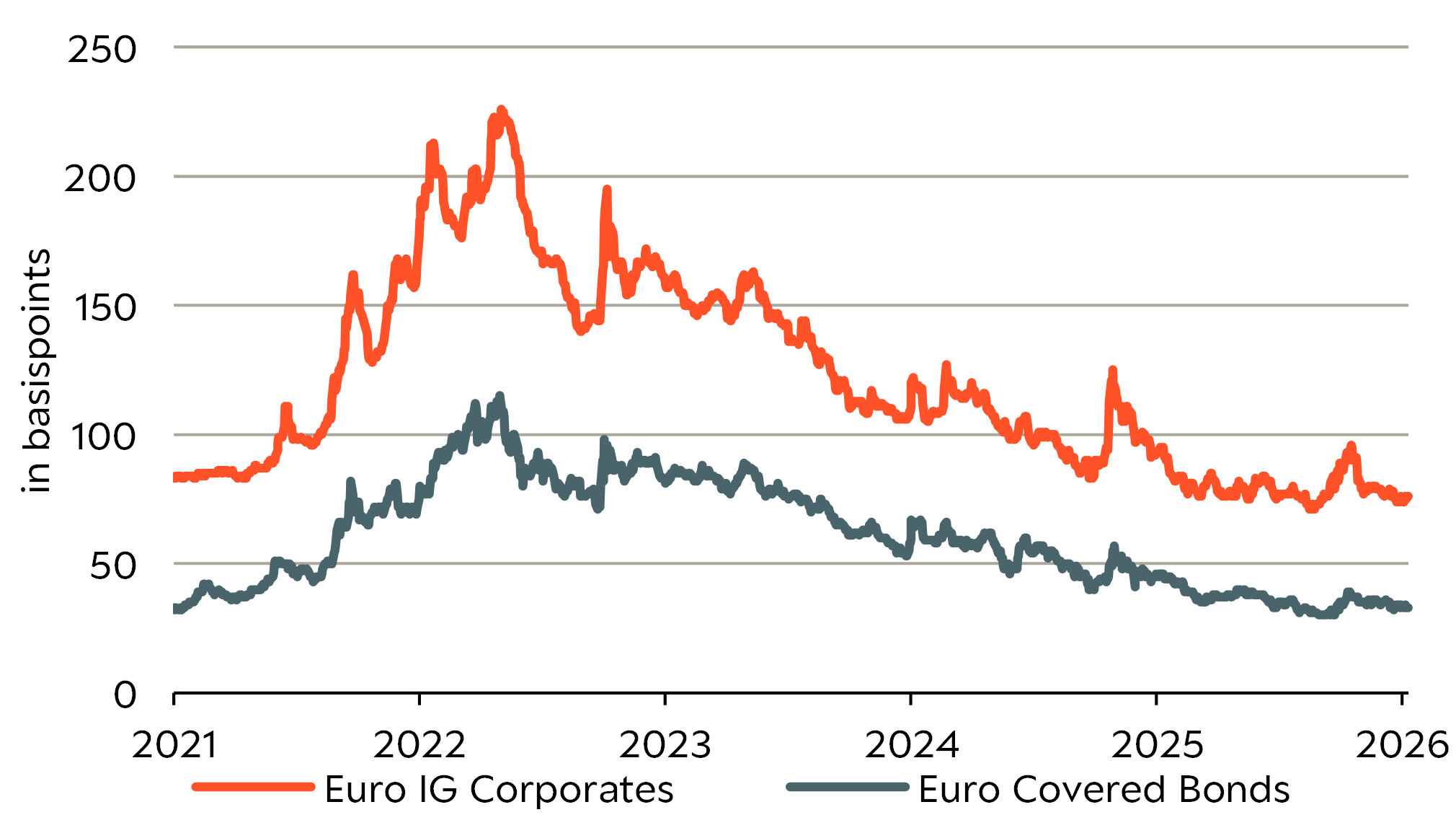
Concerns regarding a deterioration in credit quality in this segment are, however, unfounded, as a uniform European legal framework was established in 2019 to ensure extensive harmonisation of standards. Among other things, this framework includes strict quality requirements for the cover assets and, in the event of insolvency, dual recourse to the cover pool and the bank’s balance sheet. International legislation and issue prospectuses are also increasingly aligning with these European standards. As a market segment, covered bonds sit between government and corporate bonds, offering investors a high degree of security. Overall, our assessment of corporate bonds and covered bonds remains unchanged: despite the current valuation, we remain cautiously positive and continue to focus on capturing risk premiums in both segments. Any setbacks could also present opportunities to increase our exposure.
Corporate bonds and covered bonds offering attractive yields
Risk premiums* are at low levels, but continue to offer added value compared with top-rated government bonds
Conclusion: There are opportunities in all segments
Even though (geo)political developments continue to cause unrest and the market environment is likely to become volatile at times, we see yield opportunities in the medium term across all the credit segments we monitor. We view corporate bonds and covered bonds as attractive relative to safe government bonds, as they offer yield premiums over the latter that can be captured with acceptable – or, in the case of the covered bond sector, minimal – risks. Among high-credit-quality government bonds, UK gilts remain our top pick. However, euro investors should keep the exchange rate in mind. In general, inflation remains a key factor – it erodes part of the nominal returns.
Authors

Martin Mayer
Martin Mayer, CEFA, has been working as a portfolio manager since 1998. Since November 2009, as Senior Portfolio Manager at Berenberg, he has been responsible for the pension strategy of private asset management and for individual special mandates. After completing his training in business administration (Wirtschaftsakademie) and his degree in economics (University of Hamburg), he joined Deutsche Bank's asset management department in 1998. Until 2008, he managed individual client portfolios for Private Wealth Management and completed further training as a CEFA investment analyst/DVFA in 2001/2002. Mayer joined HSH Nordbank in the summer of 2008 as Deputy Head of Portfolio Management.

Felix Stern
Felix Stern joined Berenberg Asset Management more than 25 years ago as a fixed income portfolio manager. Today, the Senior Portfolio Manager heads the Fixed Income Euro Balanced team and is responsible for the selection of defensive bonds from the investment grade segment as well as specializing in short-dated bond concepts. He is also the main portfolio manager responsible for several Berenberg mutual funds. After several years in the market research department of British American Tobacco (Germany) GmbH, the trained industrial clerk switched to fixed income portfolio management at the beginning of 2000. The graduate in business administration completed his studies part-time at the distance learning university in Hagen and also obtained a degree as CCrA - Certified Credit Analyst (DFVA) as well as CESGA – Certified ESG Analyst (DVFA).