
In a nutshell
While the US economy is booming, stagflation risks have increased in Europe. However, an end to the war in Iran and high fiscal spending could provide a noticeable boost to the economy over the next two years.
Monetary policy, inflation, and the US midterm elections will be the focus in the second half of the year. Geopolitics and the IPO boom pose additional risks.
We remain constructive on equities and precious metals, supported by rising corporate earnings, ample liquidity, and ongoing financial repression. As long as neither a significantly tighter monetary policy by the Federal Reserve nor a recession is on the horizon, investors should not underweight equities.
Portfolio positioning at a glance
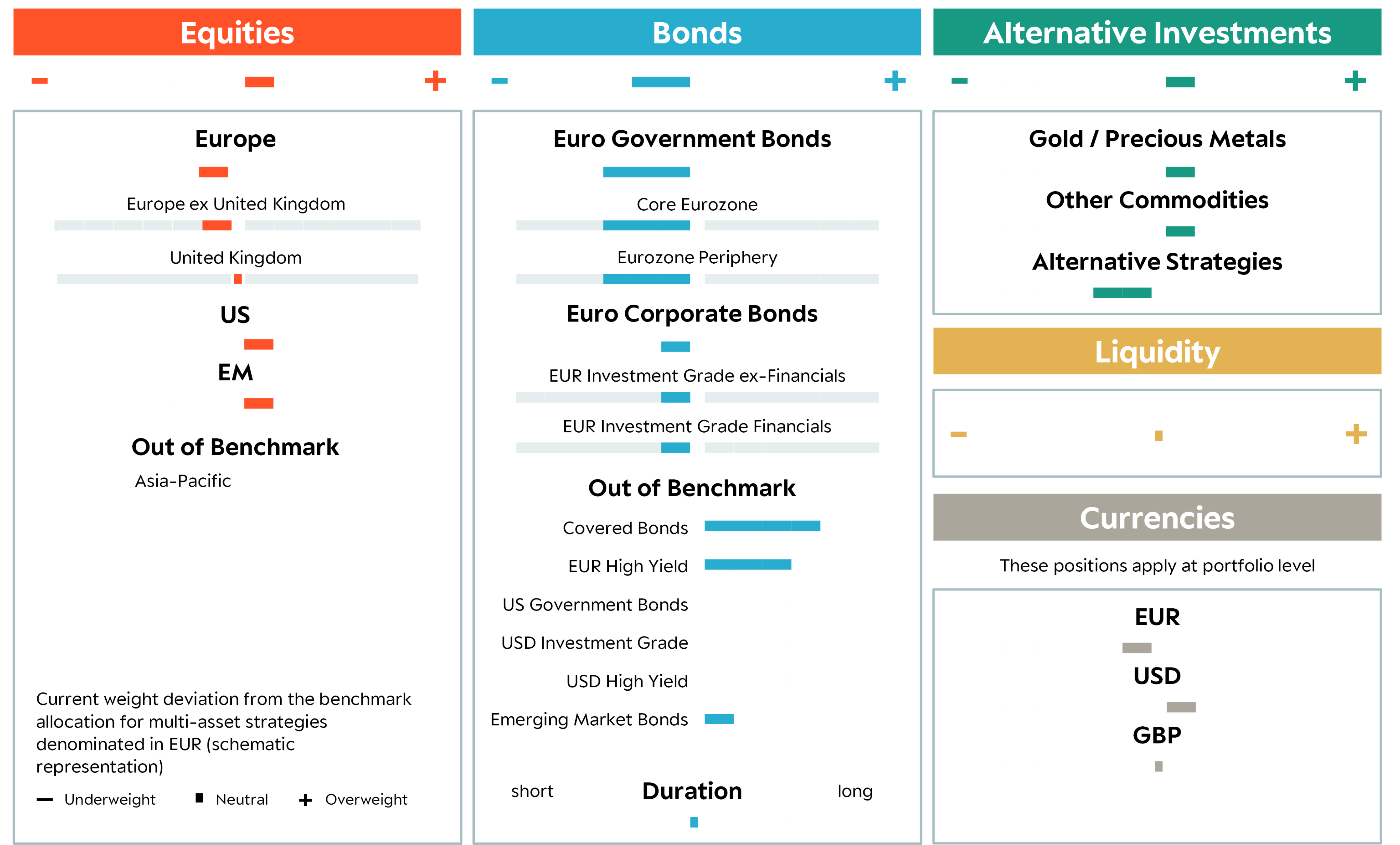
In the first half of the year, we benefited from our constructive view on equities as well as our overweight position in Emerging Markets and US stocks relative to Europe. After all, Europe is suffering particularly from higher energy costs. Furthermore, the Old Continent is not among the direct beneficiaries of AI. Our scepticism regarding government bonds has also paid off. Precious metals, on the other hand, only contributed positively at the start of the year. Then, expectations of higher rates due to increased inflation risks have weighed on them. Realising gains on our silver position and trimming down our overweight in gold turned out to be the right decision in retrospect. As we’re reaching the mid-point of the year, we are maintaining our moderate overweight position in equities, with a slight preference for the US and Emerging Markets. If the fundamental backdrop remains unchanged, we believe that a pullback in equities would actually present an opportunity to buy.
Our view that, in an environment of spiralling government debt and structurally higher inflation, real assets should be preferred over nominal government bonds is clearly reflected in the portfolio. Accordingly, we remain overweight in stocks and precious metals. Bonds, particularly government bonds, are underweighted. In addition, we hold cash as ‘dry powder’.
Berenberg Asset-Allocation
H1 2026 in Review – many surprises
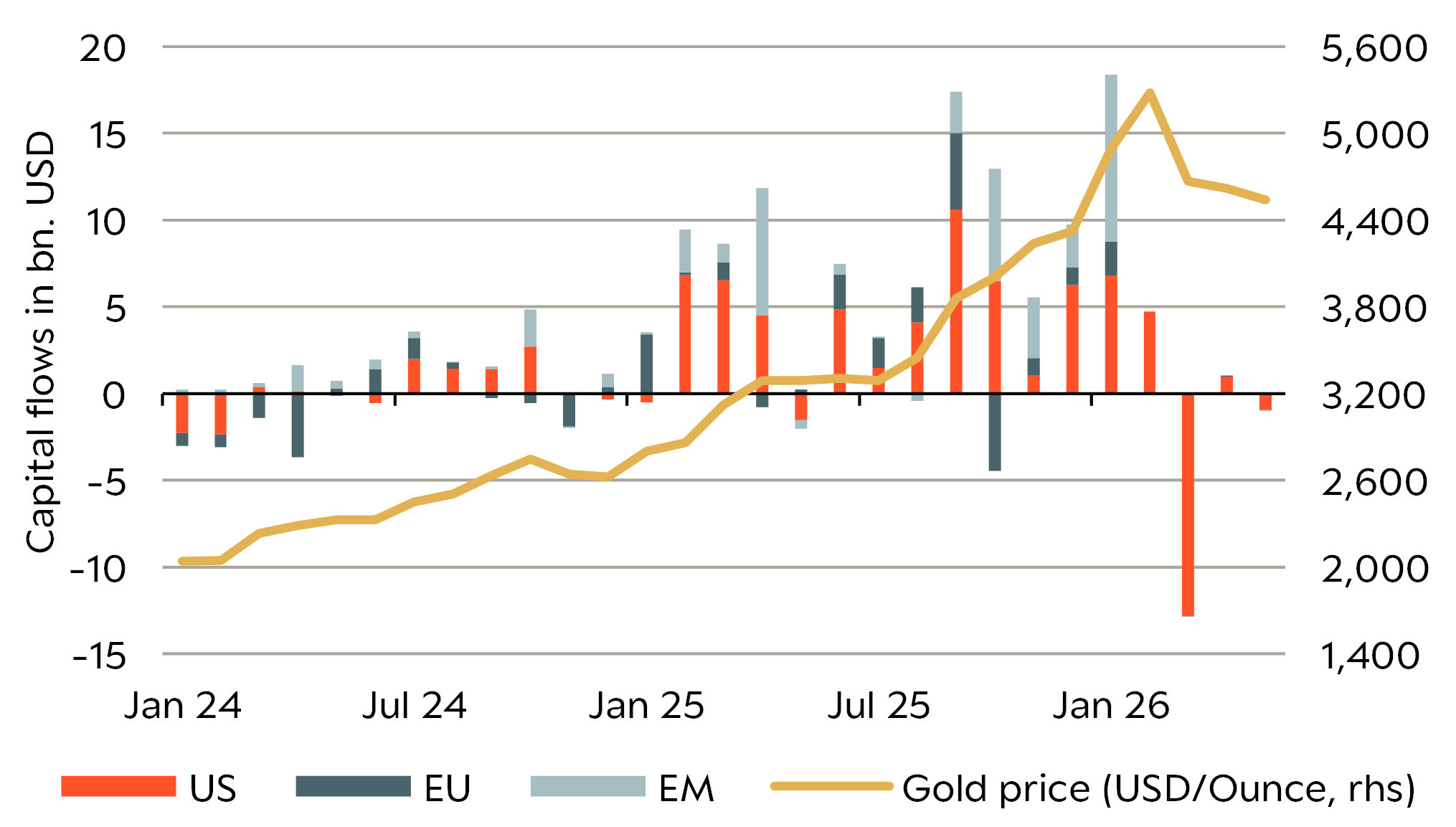
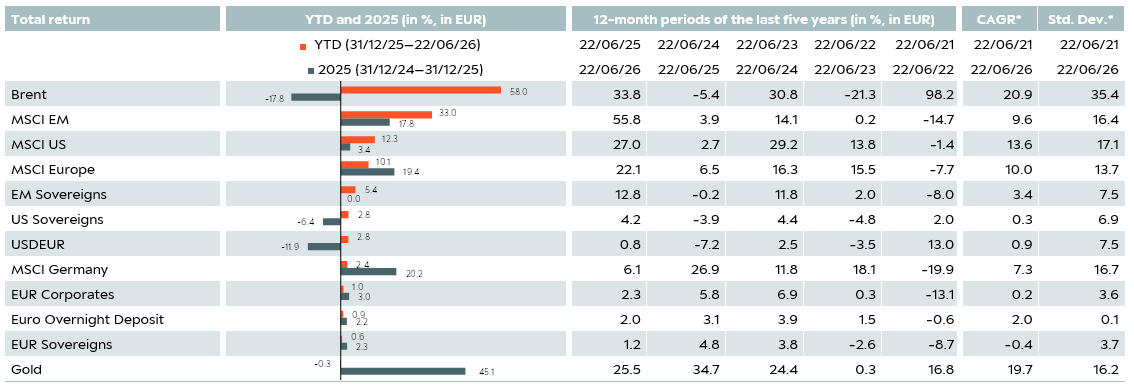
In the first half of 2026, capital markets proved resilient overall despite high geopolitical uncertainty, with a solid global economic trajectory and continued expansionary monetary and fiscal policies serving as the main pillars of support for risk assets. Following the strong returns in 2025, stock markets continued their upward trend this year, even though volatility increased noticeably – especially beneath the surface – driven by the escalation in Iran: After a start to the year driven by cyclical stocks and small-cap stocks, rising energy prices and higher interest rates led to a noticeable stress test, particularly for European stocks, which also suffered from their disproportionately low participation in the AI boom. US stocks and AI beneficiaries from South Korea and Taiwan were the big winners, driven by significant upward revisions to earnings estimates. Bonds and precious metals, on the other hand, were weighed down by the pricing out of interest rate cuts. Following the outbreak of the Iran War, gold saw massive outflows from ETFs – primarily from US investors.
Gold ETFs saw significant outflows when the war broke out
Monthly aggregated capital flows in gold ETFs by region and gold price (USD per ounce)
Whilst gold struggled in the face of surging energy prices, global stock markets appeared largely unfazed by the war in Iran
Economic outlook – market increasingly pricing in inflation risks
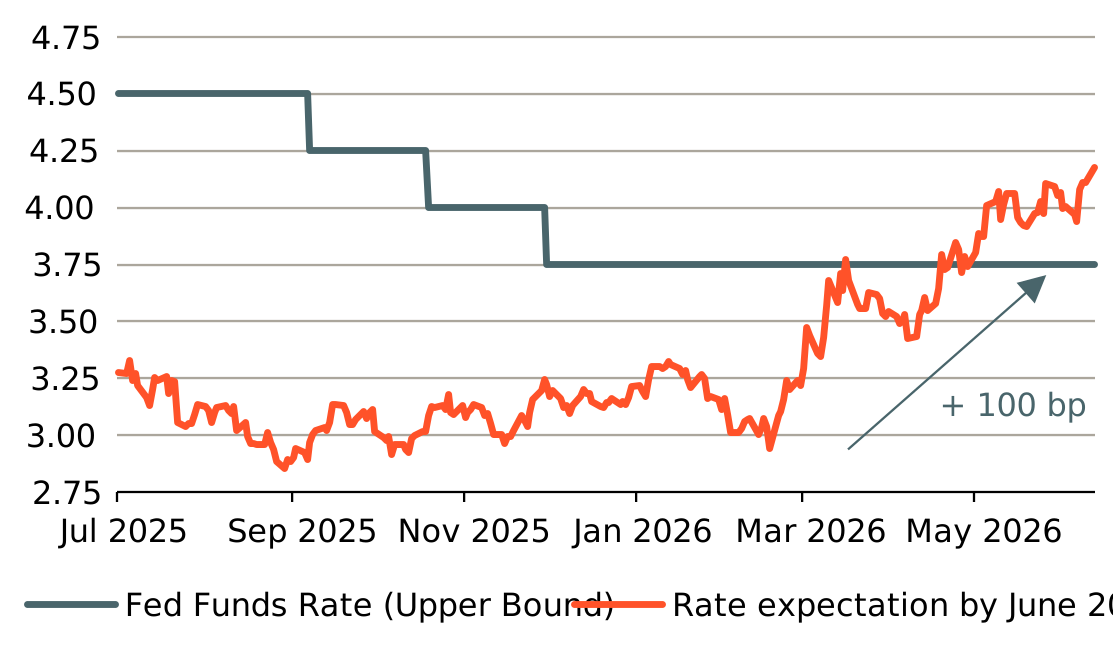
Rising energy prices and transportation costs due to the war in Iran are driving up inflation worldwide. The severity of the shock and how long it lasts will depend on how quickly maritime traffic from the Gulf returns to normal and how long it takes for the oil supply chain (including the replenishment of global oil inventories) to fully resume functioning. The European Central Bank (ECB) took advantage of the significant rise in consumer prices to raise interest rates by 25 bps in June – the first increase in three years. Market pricing suggests further rate hikes could follow. Our economists, however, are sceptical given the associated economic risks for the Eurozone. In the US, there was a similarly sharp adjustment to interest rate expectations: Since the start of the Iran War on 28 February, short-term interest rate expectations have risen by over 100 bps, driven in part by a continued robust US labour market and strong data from the manufacturing sector. In May, the market began pricing in short-term US interest rate hikes for the first time in this cycle.
Thus, the outlook for the second half of 2026 remains mixed. On the one hand, there are numerous economic and geopolitical risks. On the other hand, fiscal policy in Germany and the US continues to support the economy. The US economy is also being driven by an AI boom. Meanwhile, China continues to grapple with problems in the real estate sector and weak consumer sentiment. Europe is facing risks of stagflation. Growth in 2026 will be modest. However, an end to the war in Ukraine and high fiscal spending could then provide a noticeable boost to the economy over the next two years.
Market prices in less tailwind from loose monetary policy
Federal Reserve policy rate trend (upper bound) and policy rate expectations for June 2027 as measured by the 3-month SOFR future
Market outlook – cautiously optimistic
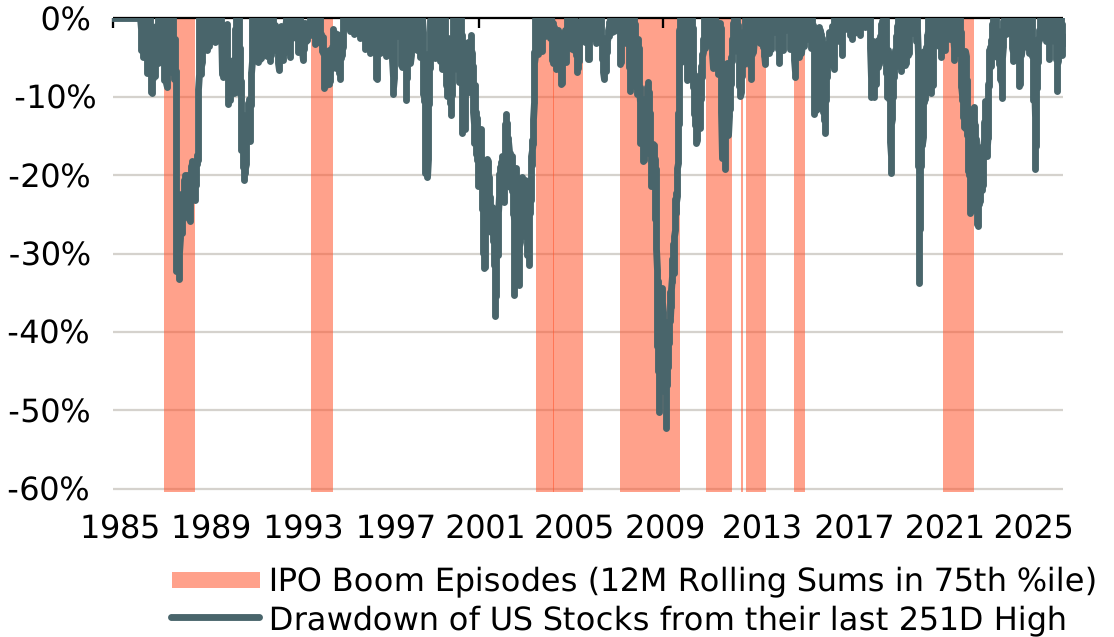
From a purely fundamental perspective, stocks should remain supported over the coming months. Corporate earnings are rising, even though expectations in some sectors are already very ambitious. A recession is not in sight, particularly in the US, and liquidity is abundant. In addition, many retail investors remain cautious, so sentiment is not yet euphoric. Interest rates, as well as the US dollar, have recently been moving sideways, which is also supportive. At the same time, technological progress – particularly in the field of AI – offers potential for margin improvement for many companies. Geopolitically, a surprise peace in Ukraine could also be positive for the markets. Furthermore, the vast sums flowing into ETF savings plans are mechanically driving the markets higher. However, we expect a volatile summer and fall. On the one hand, following the strong first half of the year, there is a strong incentive for investors to rebalance positions or take profits – especially in light of the upcoming US midterm elections. On the other hand, a new Fed chair has historically been associated with higher market volatility. The now-accelerating IPO boom, the increasing issuance of corporate bonds, and reduced share buyback programmes by major tech companies are all additional, marginally negative factors. After all, the supply of stocks and bonds is increasing, while corporate demand for shares is declining. The greatest risk for risk assets is a significantly more restrictive central bank policy – should a new global rate hiking cycle begin, many market participants would be caught off guard. This is not our economists’ base-case, but it represents the most significant risk.
Previous IPO booms were accompanied by higher volatility
IPO activity is expected to continue to pick up over the summer months
Equities and gold remain our highest conviction positions
Accordingly, we see further upside potential for stocks and are maintaining a moderate overweight position. We are focusing primarily on AI beneficiaries as well as selective value sectors such as banks to balance the portfolio. The volatility we anticipate also suggests keeping some cash on hand to capitalize on tactical opportunities over the coming months. Although we reduced our gold holdings in the first half of the year, we remain overweight. The structural drivers (higher government debt, inflation, etc.) remain intact, and positioning as well as investor sentiment are now significantly less euphoric, which is a positive development.
We remain sceptical about government bonds, and not just because of the increased inflation risks. For one thing, government debt continues to rise everywhere. In addition, the debt financing of massive AI investments is creating new competition for investors’ favour. Furthermore, the sell-off in March demonstrated once again that bonds no longer diversify equity holdings as effectively as they have over the past two decades. In fact, they often even increase portfolio volatility. Accordingly, in the bond sector, we remain heavily invested in niche themes such as frontier market bonds and catastrophe bonds.
Author

Ulrich Urbahn
Ulrich Urbahn is a CFA charterholder and, for many years, was part of one of the world’s top three multi-asset research teams in the renowned Extel survey. After earning degrees in economics and mathematics from Heidelberg University, he spent more than ten years at Commerzbank, where he worked, among other roles, as a Senior Cross-Asset Strategist. He has been with Berenberg since October 2017 and heads the Portfolio Management Liquid Alternatives & Solutions as well as the Multi Asset Strategy & Research departments. In addition, he is a voting member of the Investment Committee and is responsible for capital markets communication.