
The euro lost ground against the dollar in two ways
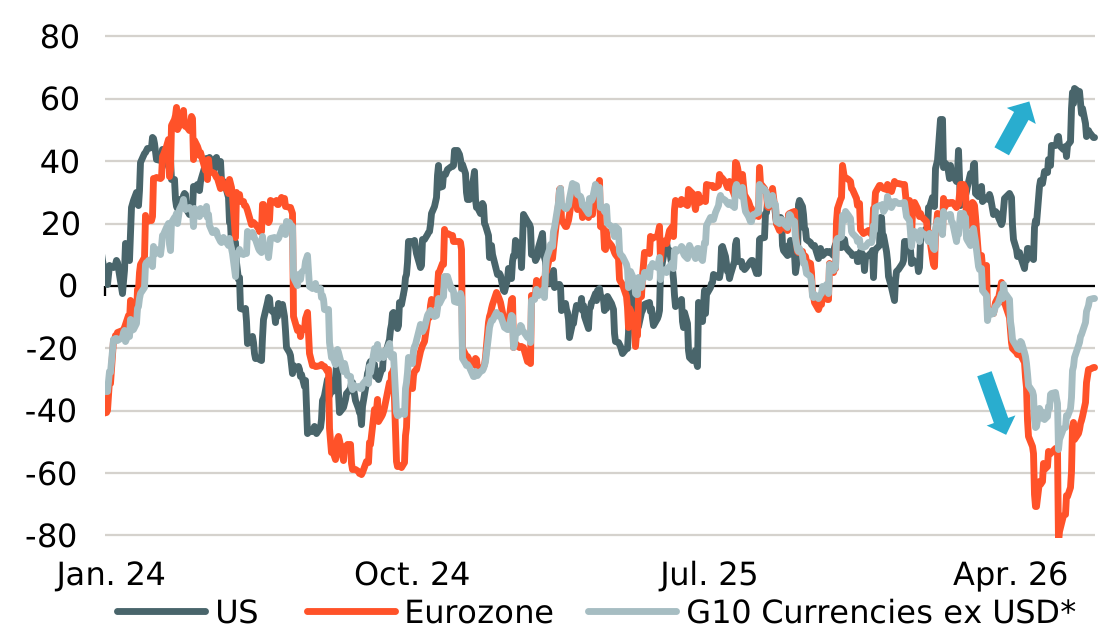
The EUR/USD has had a very volatile first half of the year. Solid macroeconomic data out of the Eurozone, combined with strong inflows from international investors into European equity and bond markets, led to a significant appreciation of the EUR/USD at the start of the year. In January, the single currency broke through the 1.20 mark against the dollar – for the first time since 2021. However, following this strong start to the year, geopolitics quickly brought the euro back down to earth: the war in Iran and the ensuing energy price shock resulted in a significant setback for the EUR/USD. One could argue that the euro “lost twice” relative to the USD. Following the outbreak of the Iran War, not only did economic activity in the Eurozone cool down noticeably, but at the same time the momentum of the US economy picked up significantly due to the global AI boom. Indeed, US economic surprises are still sitting near their highest level since 2023. This turned out to be a clear tailwind for the dollar against the euro and other G10 currencies.
In the medium term, however, our economists expect economic growth on both sides of the Atlantic to converge somewhat again – also because of the growth impetus generated by the German fiscal package. This is likely to provide some support for the EUR/USD, at least in the medium term, even though the currency is likely to continue to struggle in the short term in the absence of a clear reversal within the economic momentum of the two economies.
The USD is being supported by strong economic momentum
Comparison of various economic surprise indices
The yen’s downside potential is likely to be limited
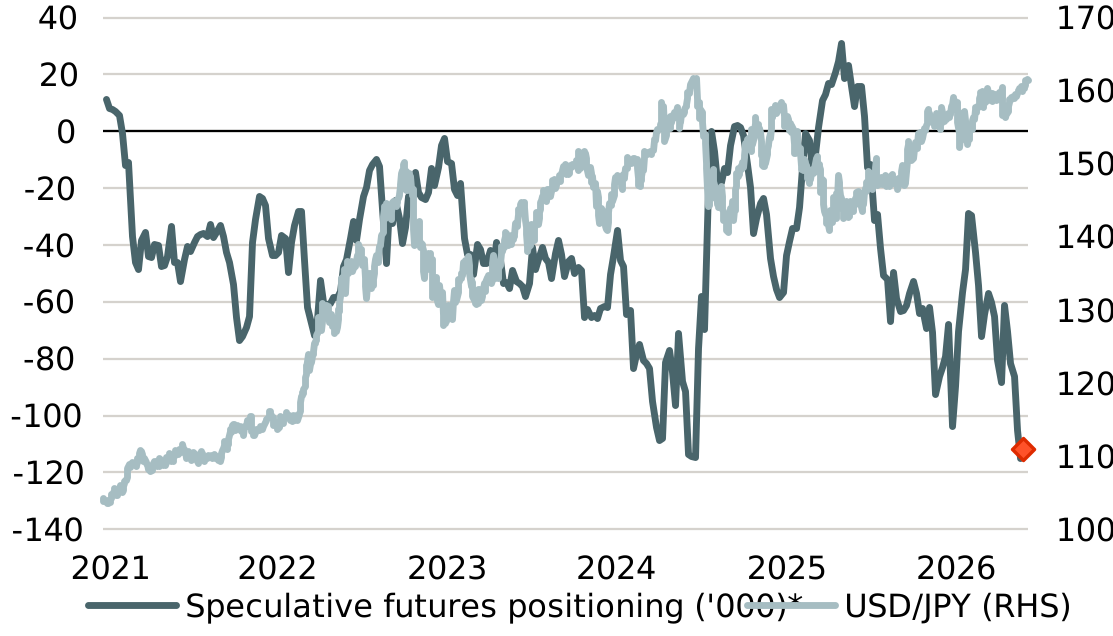
Despite interventions by the Japanese government, the yen has depreciated against the dollar and the euro and is now trading close to its recent lows from 2024. In particular, the positive market environment for risk assets and the buoyant US economy are likely to be weighing on the Japanese currency. The macroeconomic landscape in Japan actually points in favour of the yen. For instance, the Bank of Japan (BoJ) recently raised key interest rates to their highest level in more than 30 years. Furthermore, the massive fiscal package of the Takaichi government is not only to further boost the Japanese economy in the medium term, but also to keep yields on Japanese government bonds at a relatively attractive level for domestic investors. These macroeconomic tailwinds, combined with the now very bearish yen positioning of speculative investors, are likely to prevent any further significant depreciation of the yen against the dollar and the euro in the medium term – particularly if, as in 2024, equity volatility remains elevated.
Speculative yen positioning reaches extreme levels
Net futures positioning in yen futures contracts
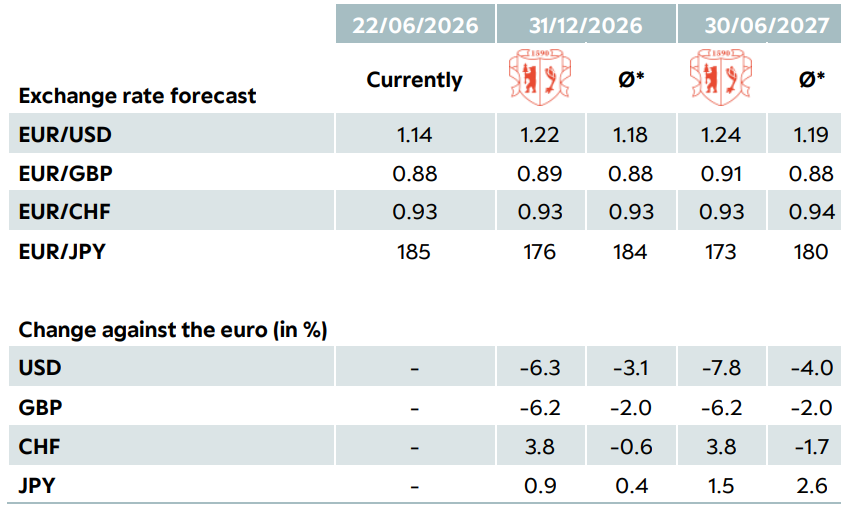
Exchange rate forecasts
Comparison of Berenberg’s and the consensus forecasts, figures for end of 2026 and mid of 2027
Author